
Donate today to help save the world’s wetlands
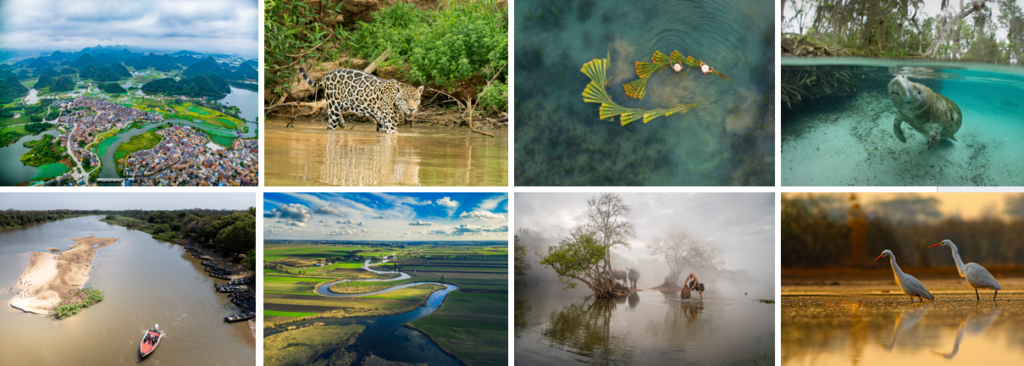
When you support us, you’ll help us to protect and restore wetlands across the globe. Your donation will help to safeguard the health of freshwater and coastal wetlands – climate champions, biodiversity hotspots and our life support systems.
Donors in the USA
U.S.-based donors can make tax-deductible contributions to the Friends of Wetlands International at Myriad USA. Because Myriad USA is a public charity, within the meaning of Sections 501(c)(3) and 509(a)(1) of the IRC, donors may claim the maximum tax benefits allowed by U.S. tax law for their contributions. If you wish to support us, here is how to proceed:
Donate by check: Address your check to Myriad USA, write Friends of Wetlands International in the memo section, and send it to Myriad USA at 551 Fifth Avenue, Suite 2400, New York, NY 10176
Donate by wire transfer or to contribute other types of property: Contact Myriad USA via email at [email protected] or phone (212) 713-7660
Donors in the EU
Wetlands International has ANBI status which means that donations are tax-deductible throughout the Euro zone (SEPA). To donate to Wetlands International, please use:
Account Name: Foundation Wetlands International
Bank account: 50.75.04.127
IBAN: NL51ABNA0507504127
Bank: ABN AMRO Bank,
Bank address: P.O. Box 283, 1000 EA Amsterdam, The Netherlands
Swift Code: ABNANL2A
Thanks for your interest in Wetlands International. Your support could help communities restore their mangroves to protect against storm surges and boost their livelihoods and biodiversity. Or protect and restore rivers and floodplains to enhance water and food security and resilience. Or rewet peatlands to help mitigate climate change and restore their ‘sponge’ capacity to absorb excess water and release it slowly in drier times.
Donate today or if you want more information, please contact us at [email protected]
Or you can donate specifically to save waterbirds
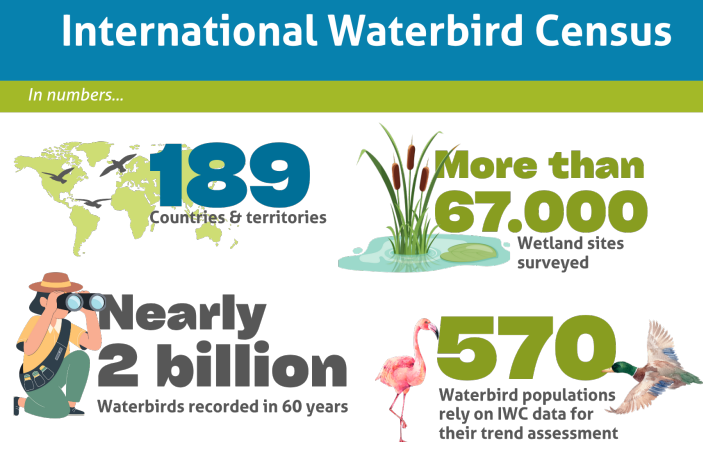
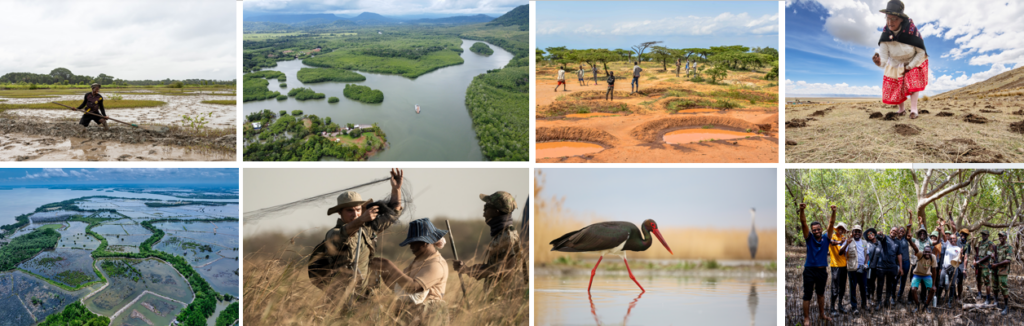
Waterbirds are iconic wetland species and have always been at the heart of our work at Wetlands International. Including the International Waterbird Census – an incredible citizen science monitoring project that has involved tens of thousands of experts and volunteers counting waterbirds across the globe since it was launched back in 1967. Because you cannot conserve, what you do not count!
The IWC has just celebrated its 60th edition – with counts in over 180 countries and territories, more than 2 billion birds recorded, and a remarkable track record of contributing to conservation action.
The power of the IWC lies in its continuity. By repeating the same coordinated efforts year after year, it builds a long-term record that allows us to see beyond short-term fluctuations and understand real population trends. The IWC depends on people like you, those who care for our shared world and want to leave it thriving for future generations of people and birds.
Your personal data will be used to process your donation and communicate with you about it. For full details on how we handle your data, please read our Privacy Policy. Recurring donations can be cancelled at any time. To cancel or change your subscription, visit our cancellation page and enter the email address you use when finalising the payment. A sign-in link will be sent to you automatically. You can contact us at [email protected] with any further queries.
Your donation to the Waterbird Fund will help:
- Enable our local partners to conduct vital national monitoring programmes.
- Train volunteers around the globe
- Improve monitoring of waterbirds at key sites
- Guide effective, science-based conservation of waterbirds