

Connecting Wetlands From South Africa to Siberia
Velddrif, Western Cape, South Africa: A new research initiative by BirdLife South Africa is set to uncover the remarkable journeys of migratory shorebirds by deploying tracking devices on these species – a first for the country.
The project focuses on tagging, colour-ringing, and monitoring species such as Curlew Sandpipers (Calidris ferruginea) and Grey Plovers (Pluvialis squatarola) at key coastal sites, including the Berg River estuary in Velddrif. These species are generally understood to migrate from South Africa to high Arctic mainland, but this project aims to better understand their movements along the Africa–Eurasian Flyway, identify critical habitats, and inform conservation efforts across international borders. Both species are threatened and listed as globally Vulnerable on the IUCN Red List. This marks a significant milestone for southern Africa. While tracking studies have been conducted elsewhere along the flyway, few tagged birds have reached South Africa, leaving the migratory routes, stopover sites, and breeding areas of South African populations poorly understood. This is the first time long-distance Palearctic migratory shorebirds, in this case the Curlew Sandpiper and Grey Plover specifically, have been fitted with tracking devices in South Africa.
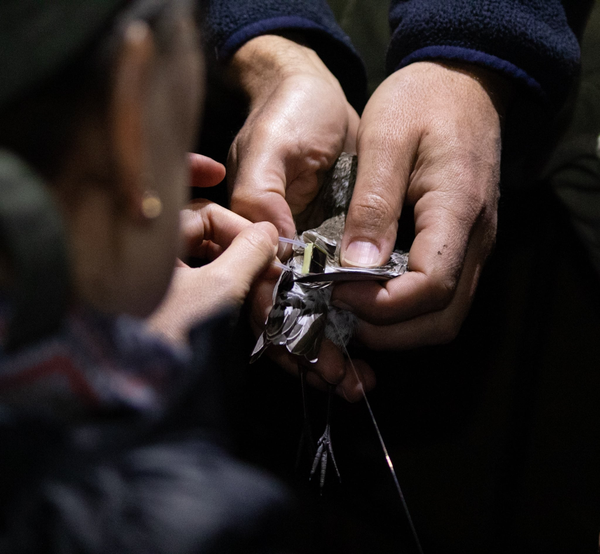
The project involves strong international collaboration, including partners from the Department of Ornithology at the Max Planck Institute for Biological Intelligence (Germany), Wetlands International (Netherlands), the FitzPatrick Institute of African Ornithology (University of Cape Town), and Conserve Eden (Plettenberg Bay). Funding has been provided by the Royal Society for the Protection of Birds (United Kingdom) and the Ecological Restoration Fund (United Kingdom).
This latest fieldwork in the Western Cape builds on earlier monitoring of European Rollers in Kruger National Park, highlighting the diversity of habitats used by migratory birds in South Africa. Access to remote field sites has been supported by a long-term loan of a 2025 Subaru Forester from Subaru Southern Africa.
By combining satellite tracking with on-the-ground monitoring, the project will generate high-resolution movement data, revealing migration routes, vital refuelling sites, and previously unknown connections between regions. These insights are essential for a flyway-scale approach to conservation.
“BirdLife South Africa has worked along the West Coast for many years, and this project builds on that foundation, showing not only how landscapes are connected within South Africa, but how shorebirds link us to critical wetlands across the continent. Following the recent Ramsar Conference of the Parties 15 in Victoria Falls, it’s a timely reminder of how important these ecosystems are,” said Jessica Wilmot, Flyway & Migrants Project Manager.
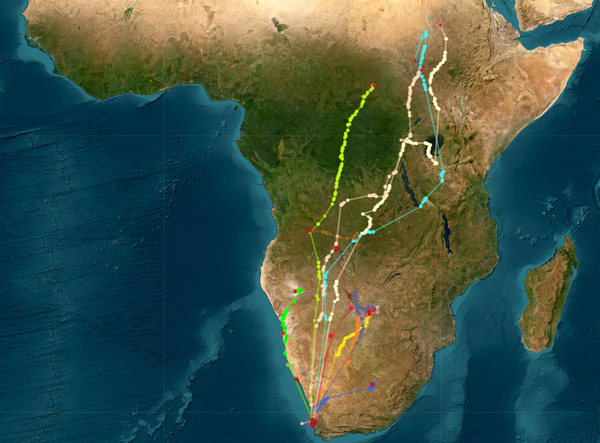
Early tracking data already reveals remarkable and varied movements. While some individuals initially moved eastward, others began a steady northward journey along the western side of Africa. Two birds have already reached the vast Sudd wetlands in South Sudan, with another close behind in eastern Central African Republic. Two individuals are currently in Angola, while three have settled in the Makgadigadi Pans Key Biodiversity Areas in Botswana. These early movements highlight the diversity of migration strategies within the population and offer an exciting opportunity for both the public and conservation community to follow the birds in near real time.
To support this work and contribute to future tracking efforts, visit: https://www.birdlife.org.za/shorebirdtracking