

Almost half of European freshwater fishes at risk of extinction
The updated European Red List of Freshwater Fishes – the most comprehensive assessment in 15 years – reveals little evidence of species recovery and calls for urgent action to protect Europe’s aquatic biodiversity.
Nearly six in ten native European freshwater fish species are now of elevated conservation concern, according to the IUCN assessment, which evaluated all 558 native species. The findings show that 42% are threatened with extinction, while an additional 18% are classified as Near Threatened.
Freshwater fishes are the most diverse vertebrate group on Earth and act as key indicators of ecosystem health. The deteriorating status of freshwater fishes signals broader ecosystem decline. Without urgent, coordinated action to tackle habitat loss, pollution, invasive species, and climate change, Europe risks losing a significant portion of its aquatic biodiversity within a generation.
Key findings of the European Red List
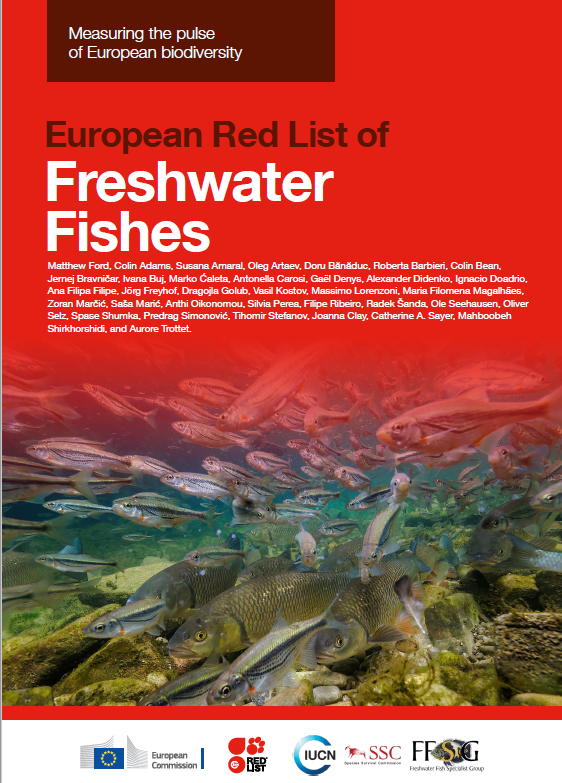
Produced through the collaboration of over 135 experts from more than 30 countries, the European Red List of Freshwater Fishes provides a scientifically rigorous, evidence-based assessment of extinction risk. The proportion of threatened species has risen by 5% since 2011, and the results show little evidence of recovery across the region.
Migratory species face particularly acute pressures. Approximately 39% of migratory freshwater fishes are declining, compared to around 14% of non-migratory species – a disparity that points to the devastating effect of barriers to fish movement such as dams and weirs.
The drivers of decline are wide-ranging and often overlapping. Habitat modification in the form of dams and other physical barriers affects 69% of assessed species, making it the most pervasive threat. Pollution impacts more than 65% of species, while invasive species affect 56%. Climate change, though already affecting 35% of species, is expected to grow as a driver in coming decades, particularly in southern Europe.
A timely resource for policy
Europe’s rivers, lakes and wetlands are among the continent’s most valuable yet most threatened ecosystems. This new European Red List of Freshwater Fishes arrives at a pivotal moment, as inland waters are finally gaining the recognition they deserve in global and European biodiversity agendas. With the recent publication of the European Water Resilience Strategy, this report offers timely guidance to help strengthen the integration of biodiversity considerations into water management and restoration efforts.
The findings provide robust scientific evidence to support the implementation of the EU Biodiversity Strategy for 2030, the Nature Restoration Regulation, and the Kunming–Montreal Global Biodiversity Framework. Repeated Red List assessments over time provide a long-term biodiversity indicator. Improvements or declines in abundance and diversity of fish communities are also captured by biological indicators under the Water Framework Directive, but the Red List of Freshwater Fishes specifically addresses the situation species by species. Therefore, assessment under the Water Framework Directive at water body level, and the Red List of Freshwater Fishes at species level are necessary to design impactful restoration and mitigation measures.
“Furthermore, surveys show that vast majority of European citizens expect more effective actions from their elected representatives to safeguard Europe’s rivers, wetlands and biodiversity,” added Baker.