

How a National Platform is Reviving Mangroves: The Story of PLANTA
Mangroves, those vital coastal ecosystems that serve as nurseries for marine life and buffers against storm surges, have long been neglected and exploited. In Guinea-Bissau, one of the world’s key mangrove countries, these unique forests faced widespread destruction due to the expansion of rice cultivation. Today, a formally recognised national platform called PLANTA (National Mangrove Landscape Platform), established with the support of Wetlands International, is reversing this trend. Through innovative strategies and partnerships, PLANTA is leading efforts to restore and protect these vital ecosystems.
The decline of mangroves in Guinea-Bissau
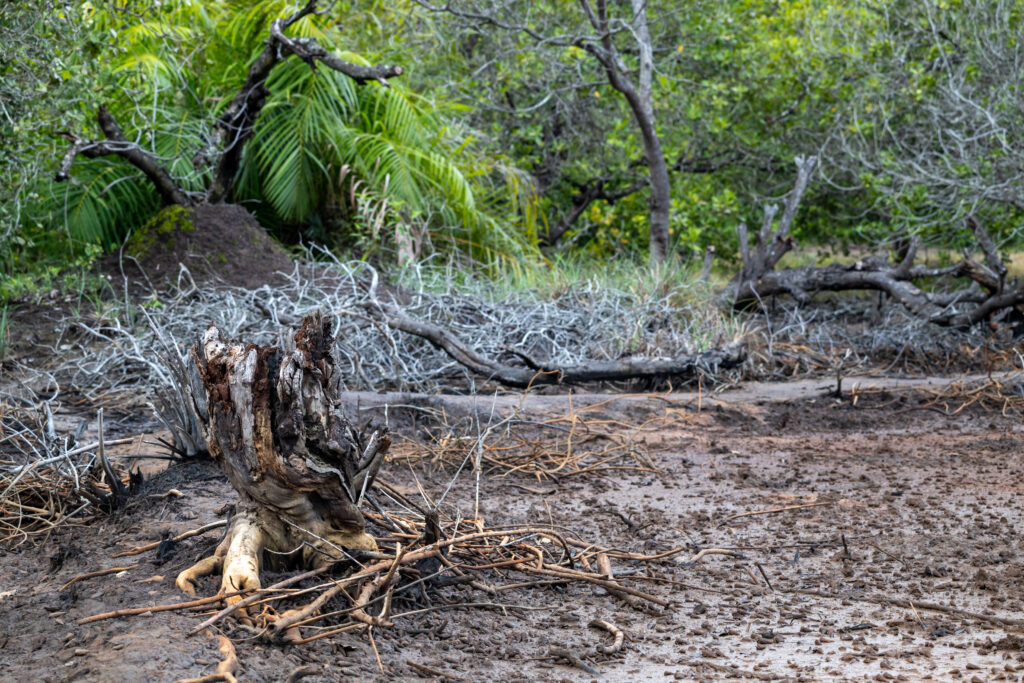
Mangrove deforestation in Guinea-Bissau began primarily as a result of efforts to expand agriculture, particularly rice farming. Mangrove soils are rich in nutrients, and converting these areas into rice paddies was seen as a practical approach to enhance food security. However, the large-scale clearing of mangrove forests to make way for rice fields not only disrupted ecosystems but also led to significant losses in biodiversity. Additionally, the draining of mangroves for agricultural use altered natural hydrology, degraded soil quality, and threatened coastal resilience against climate impacts.
Today, the need to restore and conserve these critical ecosystems has driven the establishment of large-scale initiatives and collaborative platforms, such as PLANTA, to coordinate, evaluate, and maximise the impact of mangrove protection efforts.
What is PLANTA?
Founded in 2020, PLANTA is a collaborative national platform in Guinea-Bissau that aims to unite the efforts of stakeholders working in the mangrove area by gathering resources, facilitating coordination, promoting knowledge sharing, harmonising methods, and setting common objectives in the fields of research, education, advocacy, and fundraising. Initiated with the support of Wetlands International, PLANTA serves as a central hub for coordinating mangrove management efforts, bringing together diverse stakeholders including government bodies, international organisations, and local NGOs. Among its notable members are the Ministry of the Environment, the Institute of Biodiversity and Protected Areas (IBAP), the International Union for the Conservation of Nature (IUCN), and international NGOs such as GRDR, Caritas or Wetlands International.
“We must work together, we need synergy, pooling resources, and that’s what we are doing through the PLANTA platform,” says Jean-Louis Sanka, representative at IUCN in Guinea-Bissau, reflecting the collaborative nature of the initiative.
The platform’s efforts focus on promoting best practices in mangrove restoration, strengthening the capacity of local and regional actors, and leveraging tools like the Global Mangrove Watch – a remote sensing data and monitoring platform. This international collaborative tool is continuously updated with the latest data and high-resolution maps, catalysing the action needed to protect and restore mangroves effectively.
A Digital Platform-Shaping Policy
One of PLANTA’s most significant achievements is the development of a national mangrove restoration database, accessible at PLANTA’s official website. This digital tool improves coordination among stakeholders and tracks restoration projects across the country. By centralising data on ongoing initiatives, the platform ensures that efforts are aligned with national and regional conservation goals, making it easier for stakeholders to collaborate and avoid duplication of efforts.
The platform is not just about gathering data – it is about using that data to inform policy. PLANTA has played a key role in shaping regulatory and management tools for mangrove conservation in Guinea-Bissau. The proposed law on mangroves and the forthcoming national mangrove strategy, both supported by the platform, seek to formalise protective measures and define key management actions to enable mangrove conservation, restoration and sustainable use.
Promoting best practices for mangrove restoration
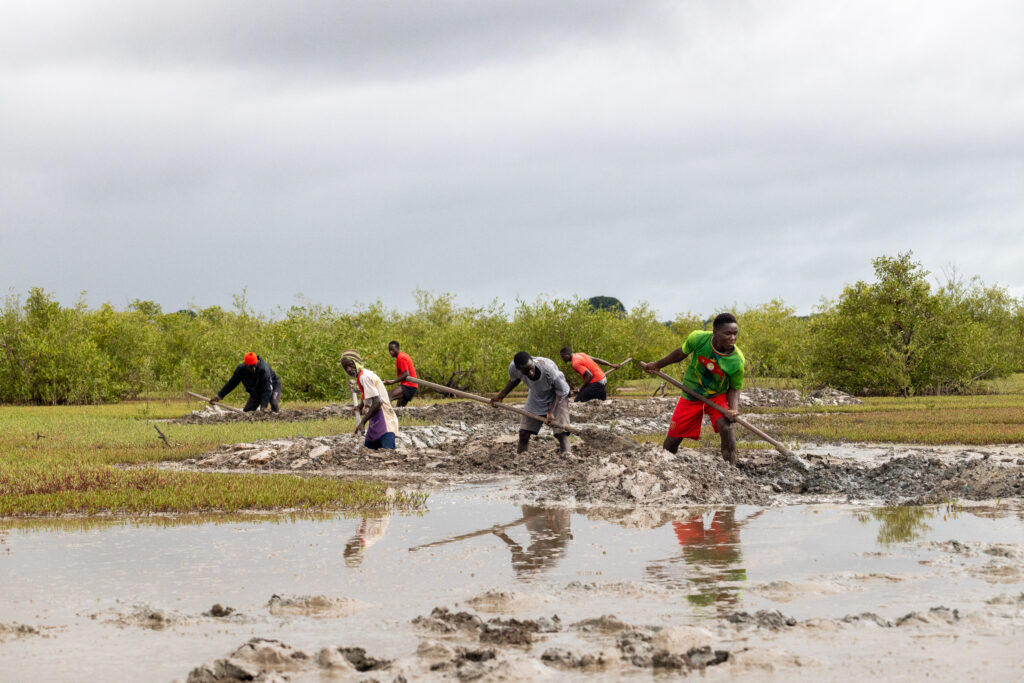
Trainings were provided by Wetlands International to PLANTA members on the Ecological Mangrove Restoration (EMR) approach, which focuses on restoring natural hydrological conditions to enable the natural regeneration of mangroves, making the restored areas more resilient and self-sustaining. These efforts led to the restoration of 490 hectares of mangroves using EMR by PLANTA partners and facilitated the widespread adoption of best practices in mangrove restoration.
The Benefits of Restoration
The benefits of restoration extend beyond the environmental sphere. “Mangroves play a very important role in Guinea-Bissau, covering 8% of the country’s total area… 60% of communities live in these zones, making mangroves one of the most important resources today,” explains Abdoulaye Ndiaye (Laye), Wetlands International’s programme manager in Guinea-Bissau. Restoring these ecosystems supports local fisheries, protects against coastal erosion, and enhances carbon storage, providing a multi-faceted solution to climate and social challenges.
Laye further elaborates on the community’s involvement: “We have mobilised the community, particularly the youth, to do this restoration work. They are the beneficiaries of the mangrove and all the resources it provides.” His words reinforce the idea that empowering local people to take part in the restoration not only contributes to environmental sustainability but also ensures that the benefits are felt directly by those who depend on the mangroves.
The Guinea-Bissau Chapter of the Global Mangrove Alliance
PLANTA has been the foundation for the establishment of a national chapter of the Global Mangrove Alliance (GMA) in Guinea-Bissau.
Launched in September 2024, the Guinea-Bissau National Chapter of the GMA aims to halt mangrove loss, enhance protection efforts, and promote science-based restoration. Operating under PLANTA, this chapter will benefit from the GMA’s global resources, including funding, scientific knowledge, and best practices for mangrove management. This new chapter marks a crucial step forward.
The GMA is a coalition bringing together technical experts, civil society organisations, governments, local communities, businesses, funding agencies, and foundations to accelerate coordinated global action to conserve and restore mangroves. The alliance includes leading international organisations such as Conservation International, The International Union for the Conservation of Nature, The Nature Conservancy, World Wildlife Fund and Wetlands International among others.
Mr. Viriato Luís Soares Cassama, Minister of the Environment, Biodiversity, and Climate Action of Guinea-Bissau, presided over the launching ceremony and declared with ambition: “The installation of the national chapter of the Global Mangrove Alliance is a significant milestone for Guinea-Bissau and for the world. We plan to expand protected areas, with a special focus on mangroves, promote agricultural and fishing practices that respect ecological balance, and rehabilitate degraded areas. Through the GMA, we will be able to share experiences, technology, and knowledge to strengthen policies and actions in favour of mangroves. This network will also facilitate access to international funds aimed at mitigating climate change and conserving biodiversity.”
The role of national GMA chapters
National GMA chapters, such as the one in Guinea-Bissau, play a pivotal role in localising global conservation goals. While the GMA focuses on halting mangrove deforestation and restoring ecosystems worldwide, national chapters tailor these objectives to their specific contexts. In Guinea-Bissau, this means addressing the historical damage caused by rice cultivation, supporting local livelihoods through sustainable practices, and integrating mangrove conservation into national policy frameworks.
The Guinea-Bissau chapter, spearheaded by PLANTA, aims to leverage these global goals while fostering local action. The platform’s work in coordinating stakeholders, sharing knowledge, and aligning restoration efforts with policy development sets a strong foundation for meeting the GMA’s ambitious targets.
The Mangrove Breakthrough: accelerating action and investments
In 2024 Guinea Bissau signed up to the Mangrove Breakthrough, a global initiative to secure the future of over 15 million hectares of mangroves by 2030, initiated by the United Nations High Level Climate Champions and the Global Mangrove Alliance. Thus far the Mangrove Breakthrough leveraged support from a total of 31 governments, alongside 57 non-state actors including finance institutes, research and not-for-profit organisations. This call seeks to mobilise $4 billion in sustainable finance for mangrove action, offering funding opportunities that Guinea-Bissau is already starting to leverage.
The journey from destruction to restoration is a long one, but platforms like PLANTA are proving that coordinated action can revive ecosystems and secure their future. “All of us, if we work together, we can protect mangroves and create the right long-lasting conditions,” says Padjallo, an IBAP park agent, calling for sustained commitment and collective effort. By uniting local initiatives with global goals, Guinea-Bissau is not only saving its mangroves but setting an example for other nations to follow. The country’s commitment to restoring mangrove landscapes is a testament to the power of collaboration, innovation, and sustainable policy-making.