
Mangroves and sharks: A vital connection for World Wildlife Day
By Irene Kingma
Today is World Wildlife Day, an ideal time to reflect on the interconnectedness of wetland ecosystems and the species they support. Among the most fascinating relationships in nature is the one between mangroves and sharks. You might think sharks are only present in the open ocean where they travel vast distances to hunt their prey. However, when sharks are young, they depend on sheltered coastal habitats to grow up.
Globally, 13% of all marine megafauna use vegetated coastal wetlands, and hundreds of sharks and closely associated ray species depend on vegetated coastal wetlands for vulnerable life stages.
One of the most important services that mangroves provide to sharks and rays is as a nursery. Shark species such as the Blacktip Reef Shark, Bull Shark, Lemon Shark, as well as enigmatic ray species such as guitarfishes and critically endangered sawfishes thrive in mangrove forests in their early stages of life. The shallow, protected waters of mangrove forests, found in tropical and subtropical regions, provide a safe haven for young sharks and other marine life, away from larger predators, offering a place where sharks can develop until they are strong enough to venture into the open ocean.
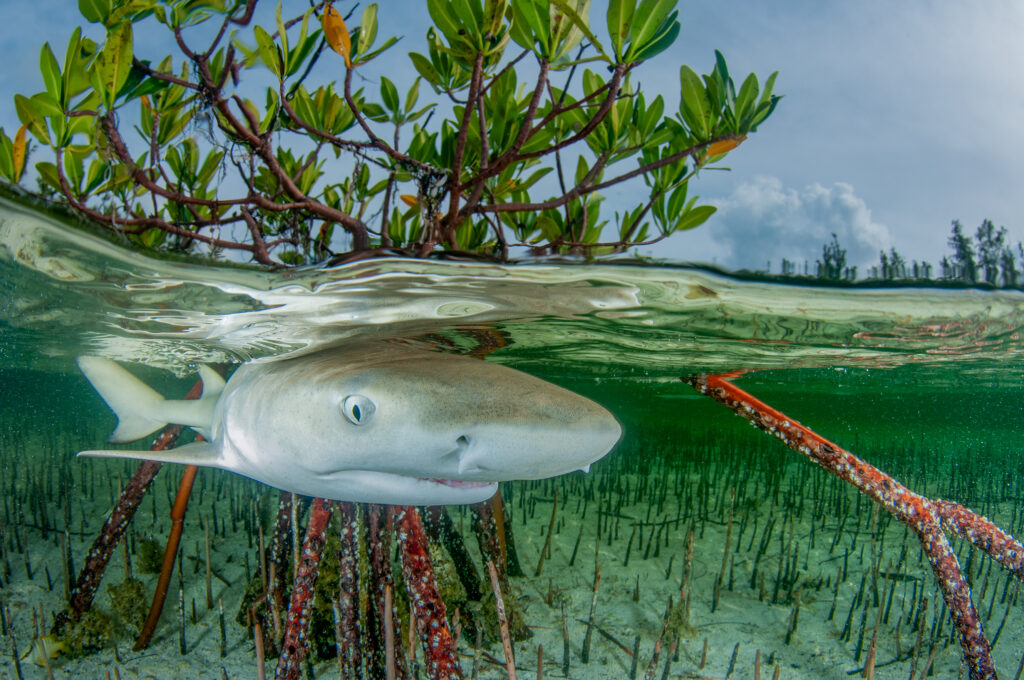
Mangroves, as well as seagrass meadows, also serve as feeding grounds, with abundant fish, crustaceans, and other small marine life thriving in these nutrient-rich environments. For young sharks and rays, these abundant food sources are vital for their growth and survival. Without healthy mangrove habitats, many shark populations would struggle to maintain their numbers. This impacts the wider marine ecosystem as sharks play a crucial role in controlling the populations of other species and balancing the marine food web.
The small island of Bimini in the Bahamas is probably home to the most studied mangrove system with sharks. Every spring, pregnant lemon shark females arrive at Bimini to give birth to their pups near the mangroves and seagrass beds of the island. The lemon sharks are very attached to their specific place of birth. Research shows that when newborn lemon sharks are displaced from their natural habitat, their so-called homing behavior kicks in, and the small sharks find their way back to the exact mangrove area where they were born. This even applies when the sharks are displaced to nearby islands with similar suitable habitats. Even after they grow older and leave the mangroves to explore other places, when it is time to pup themselves, they always come back to the same spot.
Mangrove and shark conservation goes hand in hand
The problem is that we’re losing mangroves rapidly. Mangroves are threatened by coastal development, pollution, and climate change. On Bimini, a decline in survival of young lemon sharks has been correlated to developments on the island, causing a 23% decline in first-year survival of the young sharks. In many coastal areas shark and ray populations are also declining due to unsustainable fishing pressure. As we celebrate Wildlife Day, it’s crucial to remember that protection of mangroves and sharks go hand in hand. By preserving mangrove ecosystems, we can both protect the mangroves and help ensure the survival of sharks and countless other species that depend on them.
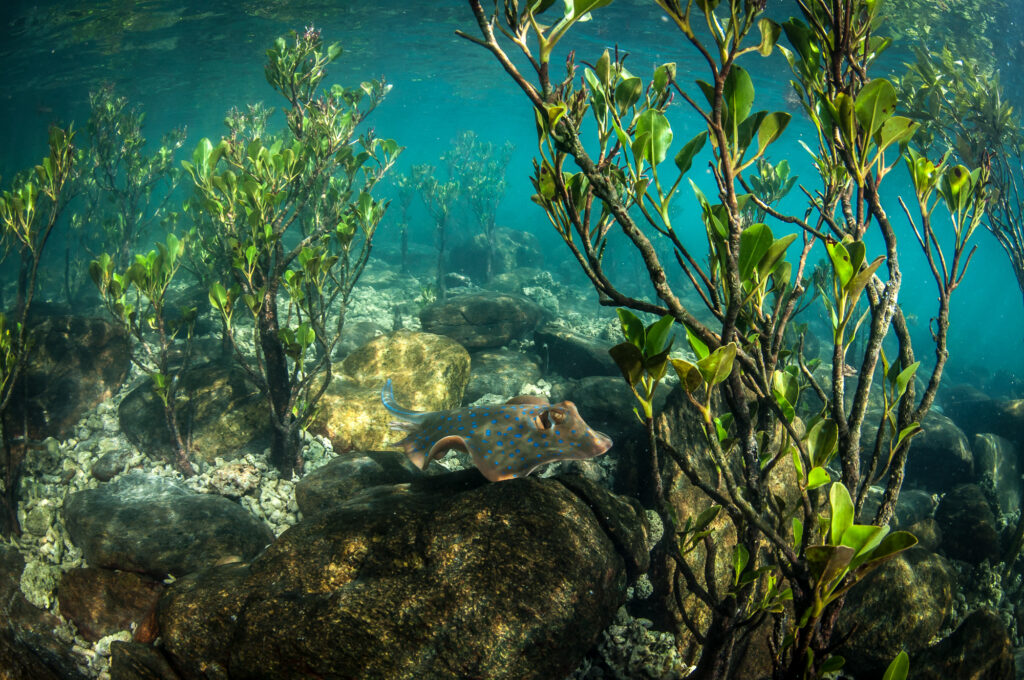
Wetlands International works in targeted places where high rates of mangrove loss intersect with threatened megafauna. For Example, the Lamu Archipelago is Kenya has been classified by the IUCN as a vital nursery area for the Blue spotted Lagoon Ray, as well as important habitat for the critically endangered Halavi Guitarfish and several other endangered shark and ray species. We are working in this region with local communities on restoring lost mangrove habitat in our Mangrove Capital Africa program.
As part of Wetlands International’s new global strategy, we will increase our work on swim ways, which are migration pathways for fish and marine animals in which coastal wetlands form a vital stepping stone. Many of our priority landscapes, such as the Lana archipelago mentioned above, provide an essential role in the life of migratory shark species and we will continue prioritize safeguarding them.
Check out below resources for more!

Important Shark and Ray areas by the IUCN shark specialist group: https://sharkrayareas.org/
This blog was also published on https://www.mangrovealliance.org/news/mangroves-and-sharks-a-vital-connection-for-wildlife-day.
United Nations World Wildlife Day (WWD) is celebrated every year on 3 March to celebrate wild animals and plants and recognize the unique roles and contributions of wildlife to people and the planet.
Banner picture: Citrus Serenity @ Olivier Clement / Ocean Image Bank
Irene Kingma