

Reviving Guinea-Bissau’s Mangroves: How Monitoring and Evaluation is Key to Success
In the coastal plains of Guinea-Bissau, where mangroves are more than just trees – they are life – something extraordinary is happening. These salt-tolerant forests, home to flamingos, dolphins, and vital fish populations, form the backbone of the country’s environmental and economic resilience. But restoring mangroves isn’t about planting seedlings. It involves creating the right conditions for natural regeneration to occur and understanding the bigger picture – a lesson Guinea-Bissau has learned. Wetlands International has spearheaded a transformative approach using a simple field protocol for Monitoring and Evaluation (M&E), ensuring that seedlings thrive and community members benefit.
The challenge with mangrove restoration
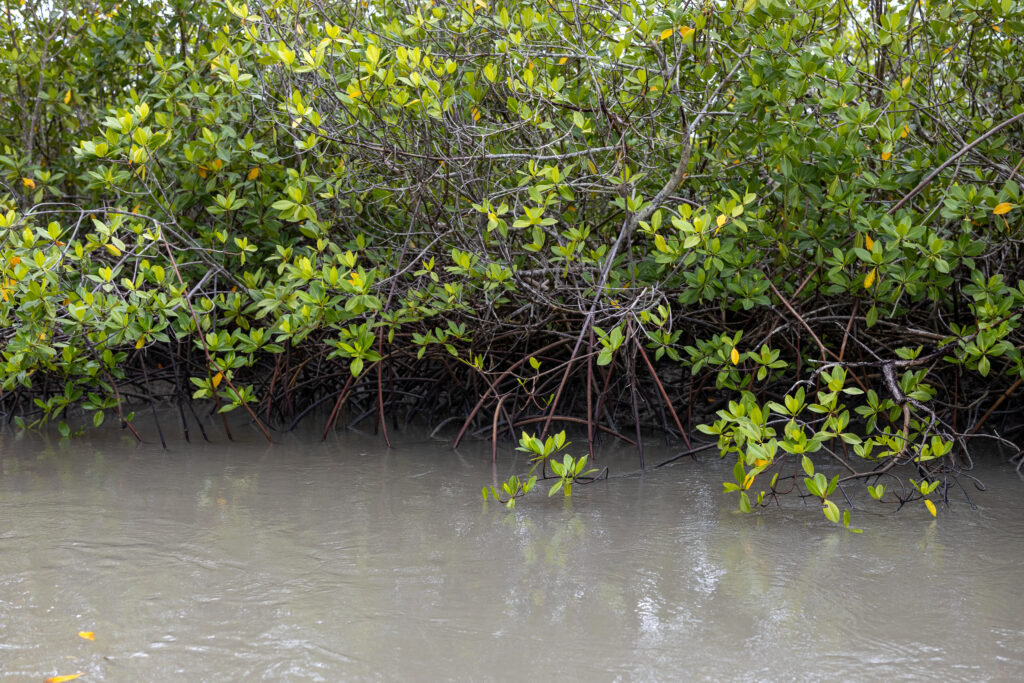
Mangroves in Guinea-Bissau cover 8% of the country, with more than 60% of the population living in these coastal areas. They are silent workers, absorbing carbon, filtering water, protecting coastlines, and supporting livelihoods. But they are under siege. Rising sea levels, deforestation, and unsustainable coastal development threaten their survival.
“Mangroves play an important role. They are nature’s superheroes for carbon sequestration, making them a vital component of the solution to climate change. These are landscapes where more than half of the population lives,” says Jean-Louis Sanka, Representative at the International Union for the Conservation of Nature (IUCN), partner of Wetlands International in Guinea-Bissau’s national mangrove platform, PLANTA. Despite their importance, many restoration efforts have failed. Mass-planting seedlings often leads to failure, with nearly 80% not surviving long-term. This is where Ecological Mangrove Restoration (EMR) enters the play. EMR involves creating the right biophysical and socioeconomic conditions for natural regeneration to occur. This process takes time and it’s important to monitor and evaluate its progress regularly to ensure success. Together with a sound M&E, it becomes a game-changer.
What is M&E? And why does it matter?
M&E is at the heart of Wetlands International’s Ecological Mangrove Restoration programme. It’s not just about tracking growth but understanding the entire ecosystem. M&E assesses the initial conditions of a site to understand if mangrove restoration is at all possible and what it will entail. Once the restoration works are carried out, it analyses if restoration is effectively happening by monitoring changes in water flow, soil salinity, and biodiversity. This process helps adjust strategies to ensure sustainable impact.
“M&E allows us to understand the health of the ecosystem, to make sure that what we’re doing is working,” explains Abdoulaye Ndiaye (Laye), Wetlands International Programme Manager in Guinea-Bissau. “To restore mangroves, we open up dykes and clean the old natural canals to allow the water to renew with each tidal cycle and to allow seedlings to enter the site and slowly regrow.”
Using GPS, the contours of each new site are drawn, and monitoring plots are set up to track progress. Easy-to-use digital tools such as ArcGIS Survey123 enable data collection on criteria such as mangrove density and height, soil salinity, hydrological connectivity, and species diversity. Disturbances to young mangroves such as animal grazing, fishermen, mangrove cutting and pollution among others, are also noted.
All this data feeds into a central database, allowing field teams to analyse and adjust restoration efforts and plan necessary maintenance works as needed.
M&E in action: data-driven and participatory
Wetlands International’s M&E approach involves the local community and National Park rangers at every step. Teams set up fixed monitoring plots in restoration sites, regularly returning to evaluate how restoration is advancing. This hands-on involvement ensures that local people are active participants, not just beneficiaries in the restoration. Also, because restoration sites are difficult to reach, partnering with local actors is fundamental for ensuring proper monitoring over time.
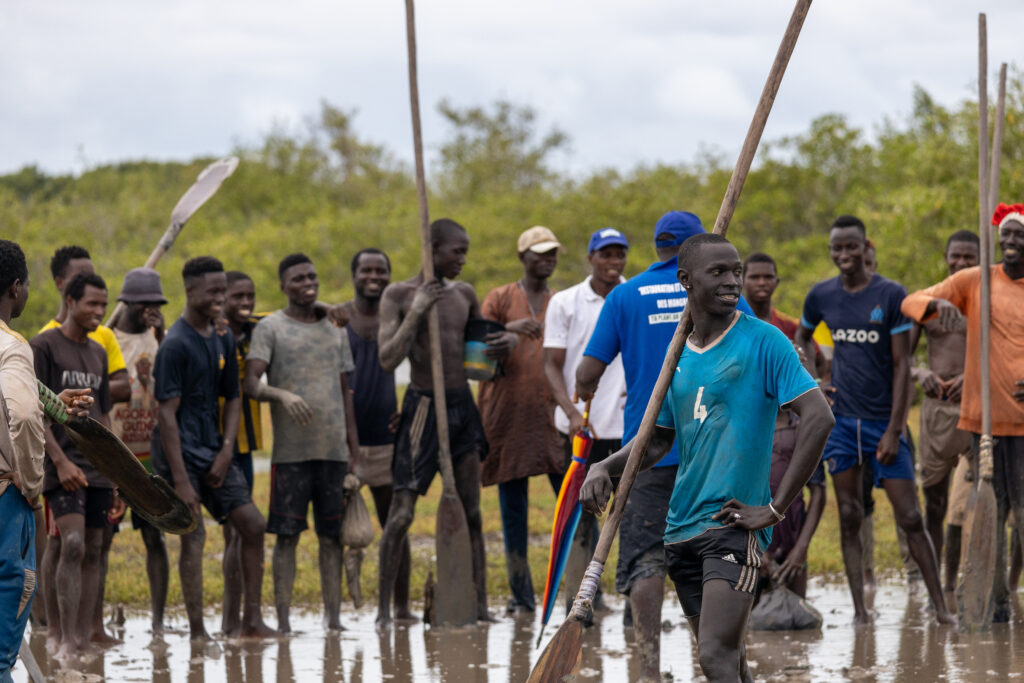
Addressing disturbances affecting newly restored sites is very important. Local leaders are also championing this cause. Laura Sania, a palm oil entrepreneur from Apilho, is doing her part to protect the mangroves. “I always mobilise young kids of the village to explain to them to leave the mangrove alone. Because mangroves are important. Mangrove brings us fish, it brings us food. So we need to stop cutting them down,” she says. Local leaders can identify interferences affecting young mangroves (i.e. animal grazing, fisheries activities, etc.) and suggest possible solutions and maintenance needs for restored sites.
This participatory approach ensures long-term success by fostering ownership. Wetlands International has trained community members to use digital tools for monitoring, empowering them to continue these efforts independently.
Think before you plant
One of the biggest takeaways from Guinea-Bissau’s restoration and monitoring journey is simple: think before you plant. Ecological Mangrove Restoration (EMR) has shown to be much more successful than planting.
“Since 2016, we have chosen a new method called assisted natural regeneration, or ecological mangrove restoration, which aims to improve optimal conditions for the sites to restore naturally,” Laye explains. It’s a slower process but much more successful. The return of migratory birds and flamingos is just one example of how nature is bouncing back.
Wetlands International’s M&E field protocol tracks site conditions over the years, adjusting strategies as needed. Photos and data points create a record: it ensures that the evolution in restoration sites is tracked and makes sure that these efforts lead to a vibrant, self-sustaining ecosystem.
The impact
The numbers speak for themselves. Between 2015 and 2024, Wetlands International restored 2,600 hectares of mangroves across more than 85 sites. But beyond the numbers, the real victory lies in the return of life – both plant and animal.
“Thanks to the operations we have carried out, we are beginning to see the return of birds, flamingos, and other animal species, as well as vegetation,” says Laye. The restoration has led to a resurgence of life, benefiting both the environment and the local communities who rely on these ecosystems for fishing, farming, and protection from floods.
For many, the change has been transformative. “Mangroves are our gold. It is the gold that we have,” says Daniel, a beekeeper from Baracca. “We used to cut mangroves before Wetlands International started the project. But since then, we learned about their importance, so we stopped cutting.”
Balancing conservation and development
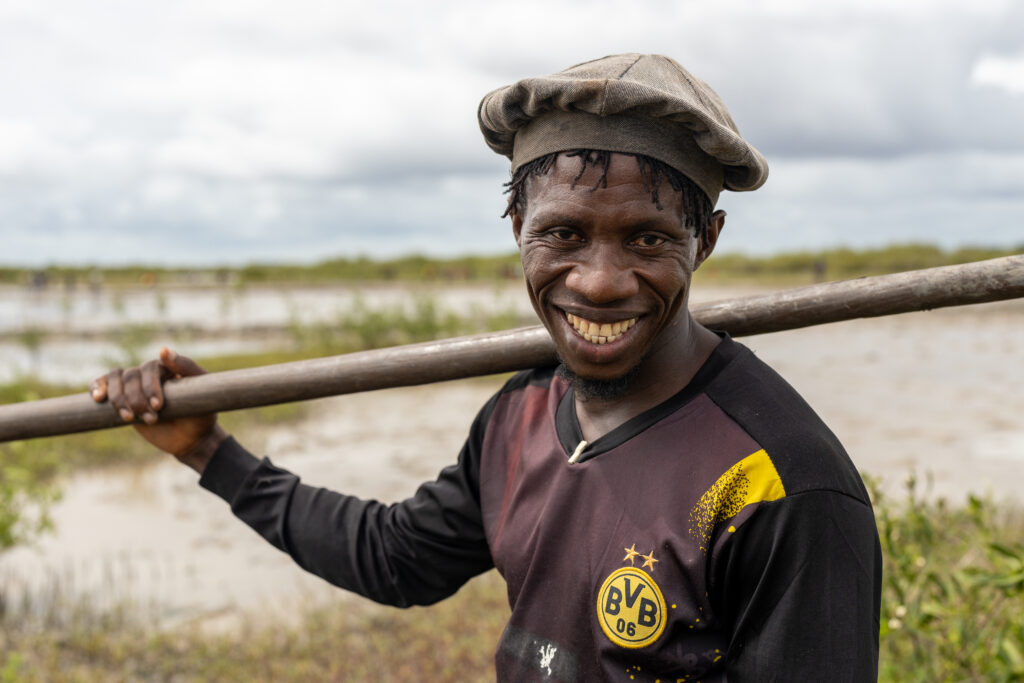
“Through the Wetlands International mangrove restoration projects, which engage closely with village communities, there has been a significant shift in mindset. Community members now recognize the essential role mangroves play in safeguarding coastlines and ensuring food security, as these ecosystems serve as nurseries for fishery resources,” states Domingos Gomes Betunde, Director of Cacheu Natural Park.
In a country where many depend on mangroves for their livelihoods, finding a balance between conservation and development is crucial. By integrating local economic needs with restoration, Wetlands International ensures that the benefits of this project are felt both environmentally and economically.
“We hope that our work will bring hope for the restoration of mangrove ecosystems around the world,” Laye says, reflecting on the broader impact of their efforts.
M&E is fundamental to success
Guinea-Bissau’s restoration journey shows that M&E is more than just data collection. It’s about understanding nature, supporting its natural processes, and making sure that the socio-economic conditions are there to support mangrove protection. True restoration involves rebuilding ecosystems, livelihoods, and hope. Through its participatory approach, Wetlands International is helping Guinea-Bissau turn the tide for its mangroves—one data point, one community, and one mangrove at a time.