
To Plant or Not to Plant? Fund What Really Works in Mangrove Restoration
By Pieter van Eijk and Susanna Tol
Investing in mangroves offers a massive opportunity to revive natural capital — they shield our coasts, lock away carbon, and support the livelihoods of tens of millions of people. As climate change and biodiversity loss escalate, the case for restoring them is stronger than ever.
But not all mangrove restoration works. Too many well-intentioned projects have failed, not for lack of ambition, but due to a fixation on quantity over quality. In pursuit of planting targets, countless initiatives have introduced monocultures in unsuitable places, often neglecting the ecological and social conditions that are required for successful restoration.
For funders looking to support initiatives that foster resilient, biodiverse mangrove ecosystems benefiting both people and planet, now is the time to embrace best practices. Here’s what to look out for.
Tree planting is not the same as mangrove restoration
Mangroves grow best when nature is allowed to take its course. They thrive in dynamic places where tides come up and down, water meanders, sediments build and salt and freshwater mix. Different species occupy specific zones across the intertidal with pioneer species creating conditions for others to settle over time. The strongest seedlings survive, anchoring into the mud and forming interwoven root systems that hold everything together. The result is a heterogenous forest with pools, channels, and dense root systems that provide feeding and nursery grounds for countless species, from clams to crabs and from fish to birds.
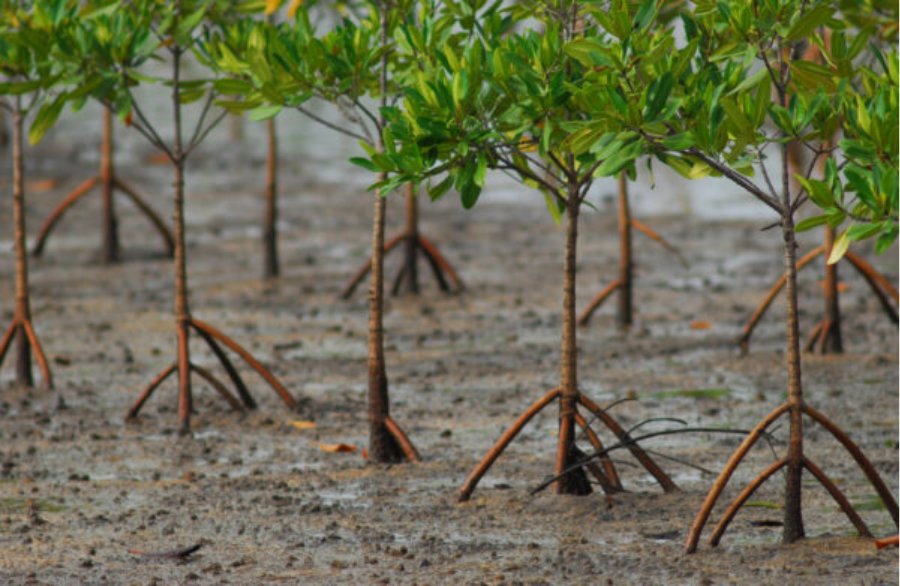
From aerial photos, a freshly planted mangrove stand may look like progress and show high seedling survival at first. But planting dense rows of a single species (a forestry mindset) rarely works in marine, dynamic settings. In many restoration sites seedlings are planted too high or too low on the intertidal and struggle to survive, natural recruitment is blocked. The hydrology and soil chemistry remain disturbed. Sometimes non-native species are used. At best, such stands deliver limited coastal protection and fisheries benefits; more often, they die—wasting funds and credibility. And even worse: planting over seagrass, salt marsh, or natural mudflats is already causing widespread destruction of these valuable ecosystems.
What works: Fix the cause, let nature do the “planting”
Mangroves recover when the physical environment is right. Degradation often stems from blocked or altered water flows, sediment disruption, or infrastructure that breaks intertidal connectivity.
The evidence-based approach known as ‘Community-Based Ecological Mangrove Restoration’ (CBEMR) restores those conditions so mangroves can regenerate naturally.
Typical actions include restoring tidal exchange by breaching pond bunds, regrading compacted soils or altered ground levels, reopening natural creeks, protecting young trees from grazing, and installing permeable structures to stabilize eroding shores.
Once hydrology is restored, tides transport mangrove seeds and propagules naturally, selecting the right species for each microhabitat, often allowing mangroves to regenerate without planting.
The outcome is a biodiverse, structurally complex forest that survives longer, and often is more cost-effective than a grid of manually planted seedlings.
These forests store carbon, buffer coasts from storms, purify water, support fisheries, and yield sustainable products like timber, honey, and seafood. Such mangroves are also likely to be more resilient to climate change.
When planting helps
Planting does have a role. If seed sources are too distant, enrichment planting can reintroduce native species after hydrological fixes and kickstart ecological recovery. In severely eroding areas (e.g. parts of the coast of Belize, the Philippines, or Indonesia), strategically planting mangroves on remaining bunds may offer short-term stabilization while longer-term measures take effect. Small-scale community plantings can also build ownership and a sense of pride over a project, so long as they’re complementary to ecological restoration.
The key is to ensure planting is strategic, site-specific, and complementary to broader restoration goals, not the main act.
People are central to all of this
Long-term restoration outcomes require that local communities actively steward restored ecosystems and take ownership of the solutions that sustain them. Successful projects are co-designed, understand and consider land tenure and traditional knowledge, and integrate existing and future livelihood opportunities from the start. When communities benefit directly from restored ecosystems — whether through fishing, sustainable harvesting, or ecotourism — they are more likely to protect them for the future. Cash-for-work planting alone rarely secures long-term care.
Redefine success with meaningful metrics
Another shift funders must embrace is to shift away from defining success by counting how many nurseries were built and how many seedlings were planted. This provides limited insight into real restoration success and provides an incentive for bad practice.
Instead, monitoring should assess the area under ecological recovery, tracking hydrological restoration and species composition and structure, alongside social outcomes like governance, equity, and income generation. These indicators provide a more accurate picture of long-term resilience.
Mangrove recovery does not happen overnight. Whilst many structural attributes of vegetation (cover, extent, density) can return within 5-10 years, full ecosystem recovery can take decades. Effective projects need to plan for the long haul, with phased implementation and adaptive management informed by regular monitoring.
Think landscape scale and long term
Equally important is understanding that mangroves are part of broader land- and seascapes. Their functioning is determined by freshwater, sediment and nutrient inputs, as well as their interaction with adjacent habitats like seagrass beds and coral reefs. Restoration that reconnects these systems boosts biodiversity and resilience across the entire coastal zone.
This work demands interdisciplinary collaboration, bringing together experts in ecology, hydrology, coastal engineering, climate science, governance, and community engagement — both to diagnose the drivers of mangrove loss and to identify solutions that are locally grounded yet scalable.
Investors must also consider long-term risks. Climate change is already reshaping coastlines through sea-level rise and extreme weather. Restoration plans must assess these risks from the outset, integrate mangroves within broader land and seascape planning, maintain ecological buffers and adopt 20-year-plus timeframes. This is essential not only for ecological resilience, but also for protecting the financial interests of investors with coastal assets or operations exposed to flooding and, erosion.
The investment opportunity: mangroves as blue carbon and beyond
For investors seeking climate- or biodiversity-aligned returns, mangrove restoration can deliver climate mitigation, adaptation, biodiversity protection and development benefits. Artificial monocultures may fail to provide the same value of ecosystem services delivered by more inclusive restoration projects. Therefore, poorly designed projects may increase the risk of non-delivery of credits, becoming financially unviable and eroding investor (or market) confidence.
Conversely, funders who redirect finance towards holistic, high-integrity restoration that follow best practice guidance, like the Global Mangrove Alliance’s Best Practice Guidelines, are more likely to support projects that deliver durable outcomes and safeguard mangrove ecosystems for generations to come.
This means demanding that projects go beyond numbers of trees planted, focusing on the integrity of the ecosystems that emerge and the communities that sustain them. By funding restoration with science and long-term vision, investors can help shift the global narrative from short-term fixes to real ecological recovery.
Resources
- Global Mangrove Alliance (2023) – Best Practice Guidelines for Mangrove Restoration
- Wetlands International (2024) – How to Effectively Restore Mangroves (YouTube Video Series)
- The Mangrove Breakthrough (2023) – Guiding Principles
- Wetlands International (2016) – Mangrove Restoration: To Plant or not to Plant?
- Abu Dhabi Environment Agency (2025) Outcome document 1st International Conservation and Restoration Conference
- ORRAA (2025) – High-Quality Blue Carbon Practitioners Guide
- World Economic Forum – Investing in Mangroves: The Corporate Playbook (2025)
This article was originally posted by the Mangrove Breakthrough.
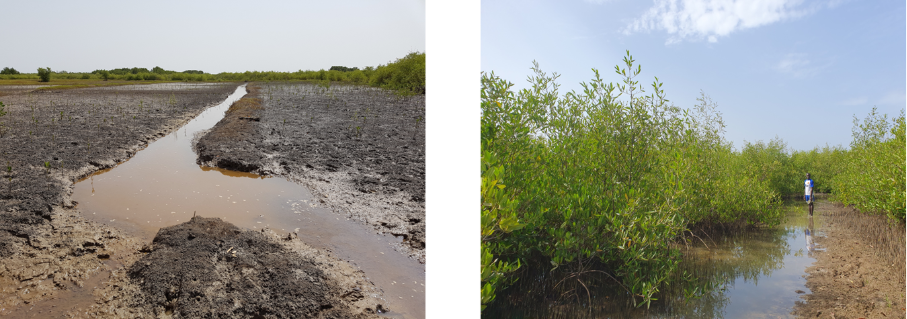
Banner picture: restoration of hydrology in Guinea Bissau to enable natural mangrove restoration @Wetlands International
Pieter van Eijk