
Consultancy for the development of a “Toolbox for Seagrass Management and Restoration in West Africa”
Wetlands International is seeking support to develop a practical toolbox for the conservation, management and restoration of seagrass ecosystems in West Africa, as part of the project “Climate Resilience for Critical Sites for Migratory Birds and People along the East Atlantic Flyway” (CREAF).
CREAF is an eight-year, multi-country initiative funded by the German Federal Ministry for the Environment, Nature Conservation, Nuclear Safety and Consumer Protection (BMUV) through the International Climate Initiative (IKI). Led by the Common Wadden Sea Secretariat (CWSS) under the Wadden Sea Flyway Initiative, it is implemented by a consortium of 15 expert organisations across Africa and Europe, including Wetlands International. The project works across key coastal sites along the Atlantic coast of Africa to strengthen the climate resilience of wetlands and safeguard the migratory waterbirds that depend on them.
The East Atlantic Flyway connects Arctic breeding grounds with staging and non-breeding sites in Europe and Africa, relying on healthy coastal wetlands that also support fisheries, shoreline protection and local livelihoods. These ecosystems are increasingly threatened by climate change, coastal development and overexploitation. CREAF responds through improved monitoring, site management, governance and investment in nature-based solutions.
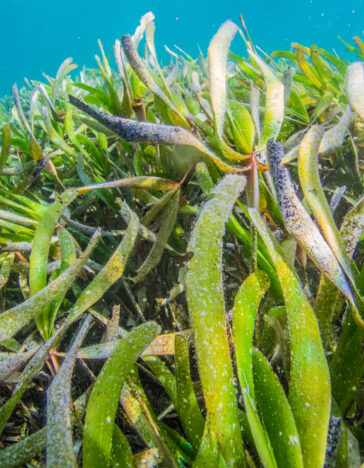
Within this framework, coastal habitats such as mangroves, tidal flats, saltmarshes and seagrass meadows are priority ecosystems. In West Africa, seagrass beds provide critical feeding habitat for shorebirds and support fisheries, yet face growing pressures and lack region-specific management guidance. The planned seagrass toolbox is therefore a key CREAF output, synthesising available knowledge and offering clear, practical recommendations for practitioners, site managers and policymakers.