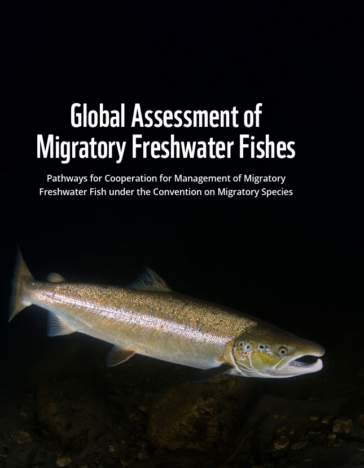

Vital Freshwater Fish Migrations are Collapsing warns UN
Some of the longest, most important migrations of species on Earth are happening beneath the surface of the world’s rivers and many are rapidly collapsing, according to a major new assessment by the UN Convention on the Conservation of Migratory Species of Wild Animals (CMS).
The Global Assessment of Migratory Freshwater Fishes, launched at the CMS COP15 in Brazil, finds that migratory freshwater fish — a group of species that maintain river health, underpin some of the world’s largest inland fisheries, and sustain hundreds of millions of people — are among the most imperiled wildlife on the planet.
The assessment identifies 325 migratory freshwater fish species as candidates for coordinated international conservation efforts, highlighting a largely overlooked biodiversity crisis unfolding across the world’s shared river basins. These species face accelerating declines driven by dam construction, habitat fragmentation, pollution, overfishing and climate-driven ecosystem changes.
The new assessment outlines practical tools governments can deploy immediately, including:
- protection of migration corridors and environmental flows,
- basin-scale action plans and transboundary monitoring, and
- coordinated seasonal fisheries.
A global crisis largely hidden beneath the waterline
Populations of animals inhabiting freshwater ecosystems are declining faster than populations of terrestrial and marine animals, yet the collapse of migratory freshwater fish populations has received little international attention.
Many migratory fish rely on long, uninterrupted river corridors connecting spawning grounds, feeding areas and floodplain nurseries, often across multiple countries. When dams, altered flows or habitat degradation interrupt those pathways, populations can decline rapidly.
According to the report, migratory freshwater fish populations worldwide have declined by roughly 81% since 1970 and nearly all (97%) of the 58 CMS-listed migratory fish species (including fresh and salt-water species) are threatened with extinction.
The new assessment deepens that picture, identifying hundreds of migratory freshwater fish with an unfavourable conservation status and underlines that protecting migratory fish requires managing rivers as connected systems rather than isolated national waterways.
Spotlight on South America’s great rivers
Host of COP15, Brazil is proposing several conservation measures related to South America’s two largest river systems, the Amazon and La Plata–Paraná.
The Amazon Basin remains one of the last great strongholds for migratory freshwater fish, but intensifying development pressures threaten that status.
They are also famed for undertaking some of the longest freshwater migrations ever recorded. Among them is the dorado (gilded) catfish (Brachyplatystoma rousseauxii), a bottom-dweller known for its metallic gold/silver skin and impressive size (up to 2 meters / 6.5 ft), highly prized in commercial fisheries. Renowned for the longest life cycle freshwater migration of any fish, its journey spans 11,000 kilometers, from Andean headwaters to coastal nurseries.
To strengthen conservation, Brazil and other governments are proposing a Multi-species Action Plan for Amazonian Migratory Catfish (2026–2036), developed through regional cooperation involving multiple countries.
Brazil has also proposed adding the spotted sorubim catfish (Pseudoplatystoma corruscans) to CMS Appendix II, highlighting the need for coordinated action in the La Plata Basin, where they are threatened by dams, altered flows and fishing pressures.
Together, the initiatives rank among the most ambitious international efforts yet to safeguard migratory freshwater fish species and reinforce the central purpose of CMS: conservation solutions for migratory species must operate across the full range of the species, and require international cooperation to succeed.