
Straight to content

Europe sets dam removal record… again!  

Published on:

OVER 600 BARRIERS DISMANTLED FOR FIRST TIME  

  • 603 removed in 2025 – 11% more than the previous record 
  • 3,740 km of rivers were reconnected across the continent 
  • countries removed their 1st barriers – Iceland & North Macedonia  

Zeist, Netherlands, May 21 – The dam removal movement has once again broken records in Europe with at least 603 river barriers removed in 2025. This unprecedented effort reconnected over 3,740 km of rivers across the continent – strengthening climate resilience, enhancing water and food  security, boosting biodiversity, and accelerating the recovery of freshwater ecosystems.  

Published today, the Dam Removal Europe 2025 report highlights the continued growth and impact of barrier removals. For the fifth consecutive year, a new record has been set, surpassing the previous high of 542 removals in 2024 by 11%. 

These achievements show a true European river restoration success story. From just over 100 annual barrier removals six years ago to more than 600 in 2025, shows how rapidly river restoration is becoming mainstream and how the momentum is growing. By removing more barriers, we are able to show how biodiversity bounces back and how we can strengthen resilience against climate change.

Merijn Hougee
Head of International Landscapes, WWF Netherlands

This sustained upward trend reflects a rapidly expanding movement, with removals showing a sixfold increase since the first continental count in 2020 (Figure 1; Table 1). Two additional countries officially removed their first river barriers in 2025 – Iceland and North Macedonia – marking their entry into the dam removal movement and bringing the total number of participating countries to 29.  
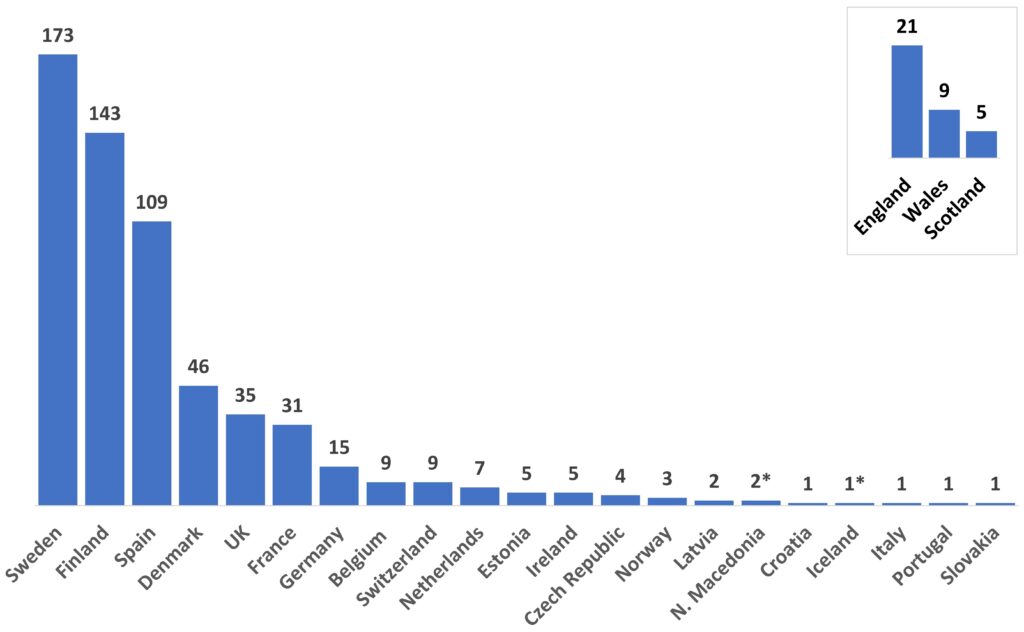
Figure 1. Number of barriers removed per country in 2025. Inset shows removals per country in the UK.

The success of the dam removal movement is based on a growing recognition that healthy rivers are critical natural infrastructure – living systems that provide flood protection, water security, biodiversity and climate resilience. People increasingly understand that obsolete dams do not need to stay forever: they can – and should – be removed to restore rivers and benefit people, nature and climate.

Chris Baker
Director, Wetlands International Europe

For the first time, Sweden was the trailblazer, with at least 173 barrier removals, followed by Finland and Spain, demonstrating how national commitment and coordinated action can rapidly accelerate progress. 

The majority of barriers removed in 2025 were small, obsolete structures such as culverts and weirs. These removals are often highly cost-effective and, when carried out at scale, deliver substantial cumulative benefits. Sweden in particular removed several timber dams, legacy of Sweden’s long history of industrial-scale forestry, which saw many rivers channelised and dammed to enable logs to float downstream.  
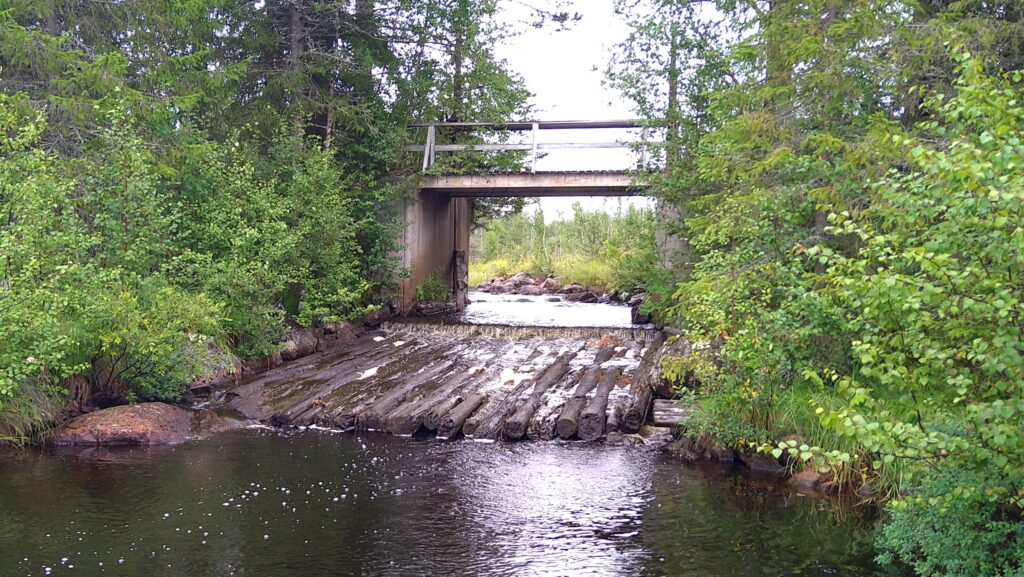
Figure 2. Fräkentjärnsdammen timber floating dam at Vindel River catchment in Sweden, (above) before and (below) after the removal works © Rewilding Sweden

It is fantastic to see Finland continue leading the way in dam removals in Europe, ranking second in 2025 after topping the list in 2024. What began as a WWF Finland mission has grown into a nationwide movement, driven by strong cooperation between government programs, local actors and civil society. The positive results we are seeing for rivers, biodiversity, and communities have created broad public and political support for continuing this work. Finland is proud to show that dam removal is not only possible, but one of the most effective ways to restore freshwater ecosystems across Europe.

Sampsa Vilhunen
Director of Marine and Freshwater Environments, WWF Finland

Europe’s rivers remain heavily fragmented, with over 1.2 million barriers – including dams, weirs and  culverts – disrupting natural processes. Many of these structures are obsolete, yet they continue to  block the flow of water, sediments and nutrients, and prevent the movement of species. 

This fragmentation contributes significantly to ecosystem degradation and has played a major role in the dramatic decline of freshwater biodiversity, with 42% of Europe’s freshwater fishes being classified as threatened with extinction, according to a recent report by the  European Commission. 

“Europe’s rivers are fragmented by an estimated 1.2 million barriers – and more than 150,000 of them are already considered obsolete. That makes barrier removal one of the biggest ecological ‘easy wins’ available today,” said Baker. “These obsolete barriers no longer provide any benefits, yet they continue to degrade rivers every day they remain standing.” 
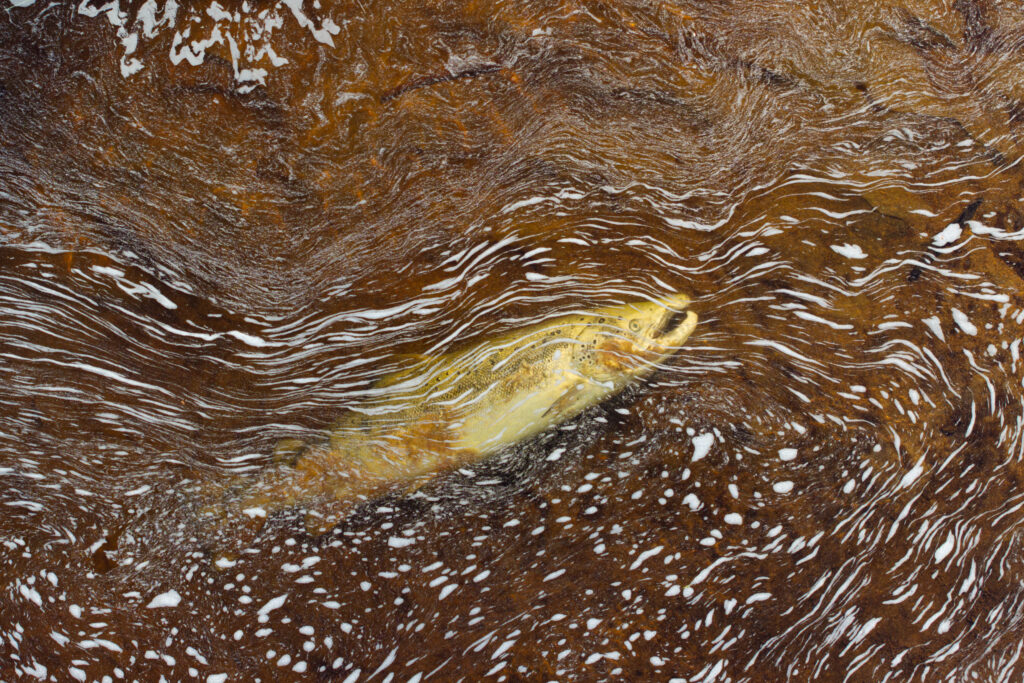
Figure 3. Dead Atlantic salmon, Salmo salar, a migratory species with declining trend in its populations © Arthur de  Bruin 

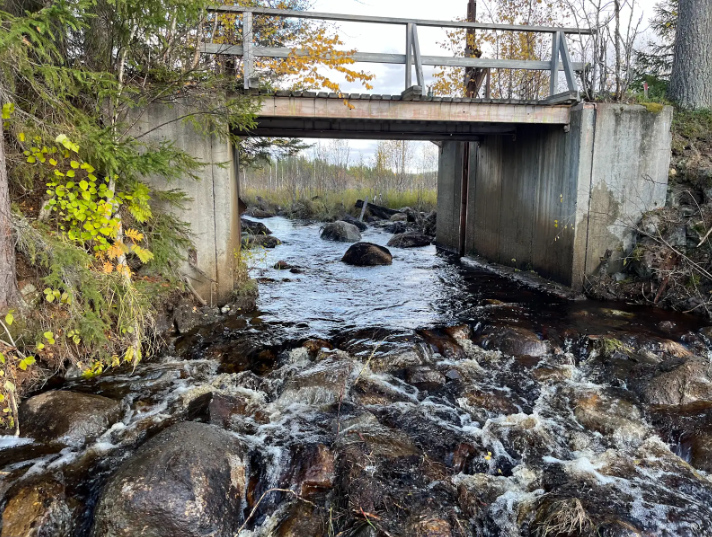
North Macedonia, with its first officially recorded barrier removals, executed by Eko-svest, unlocked more than 70 km of habitat in the Pčinja River basin. These removals followed a structured  methodology for prioritizing barriers and were strongly supported by the public, with 91% favoring restoration of free-flowing rivers nationwide. The project reconnected habitats that are critical for more than ten native fish species, improved water quality, and reduced flood and safety risks for communities. This pioneering effort provides a replicable model for river restoration and highlights  the importance of institutional coordination and regulatory frameworks for future barrier removals in  the country, but also on a European level.  

Although we faced technical difficulties with the preparation works and the removal, and a general scepticism at the beginning of the project from different stakeholders, the results were broadly accepted and praised by many, including the local community. This restoration project shows that sometimes ecological impact is not the only argument for dam removal. People also need to understand the importance of such restoration and be a driving force behind it.

Ana Colovic Lesoska
Executive Director, Eko-svest
Figure 4. Shuplji Kamen barrier site at Pčinja River in North Macedonia, (above) before and (below) after the removal works ©  Eko-svest 

This record-breaking year also reinforces the importance of barrier removal in achieving Europe’s  broader environmental goals. The EU Nature Restoration Regulation, which entered into force in 2024, includes a target to restore at least 25,000 km of rivers to a free-flowing state by 2030. Barrier removal  remains one of the most effective tools to meet this target. At the same time, these efforts contribute  directly to global ambitions under the Freshwater Challenge, which aims to restore 300,000 km of degraded rivers worldwide by 2030.  

With momentum continuing to build, 2025 marks another milestone year for river restoration in  Europe demonstrating that large-scale change is not only possible, but already well underway. 

________________________________  

Editor’s Notes:  

You can download the full report and the graphs and photos herein here.  

For any queries, please contact:  

Foivos Mouchlianitis, [email protected] [Text Wrapping Break][Text Wrapping Break]About Dam Removal Europe  

Dam Removal Europe (DRE) is a coalition of six organizations: the World Wildlife Fund, The Rivers  Trust, The Nature Conservancy, the European Rivers Network, Rewilding Europe, and Wetlands  International Europe. The overall ambition of DRE is to restore the free-flowing state of rivers and  streams in Europe. In that respect, DRE aims to establish barrier removal as a restoration tool and to  mainstream this practice. Through a bottom-up process DRE has created a continuously growing  European network and it is working towards a holistic approach to remove barriers. More information:  www.damremoval.eu