
Wetlands Diary: Daily updates from CMS COP15
Top daily talking points about wetlands and by Wetlands International from the 15th Conference of the Parties to the Convention on Migratory Species (CMS COP15) in Brazil. Pinning this to the top as it’s an critical clause in the Pantanal Declaration, which was agreed at the start of the COP:
Final Day: Successful end to COP15…and onwards to Germany in 2029
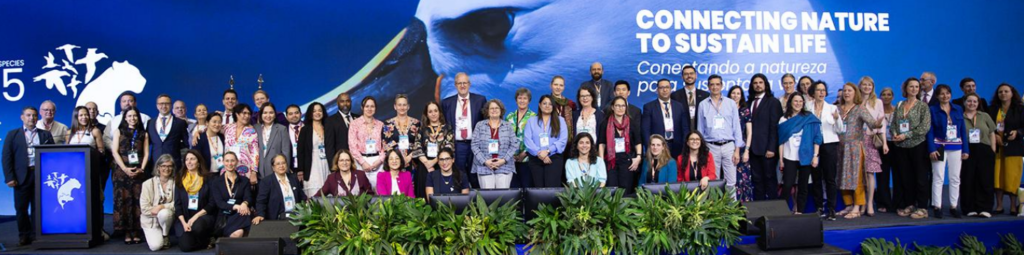
The COP plenary rounded out the day and the conference with all proposed resolutions, decisions, and amendments to the Appendices that had been forwarded for a vote being approved by consensus. Key decisions addressed scientific research and collaboration priorities on deep-sea mining, freshwater ecosystems, marine flyways, and actions to reduce vessel strikes on at-risk whale populations.
The COP added 40 species, subspecies, and populations to the CMS Appendices, including our priority species, such as Lesser Yellowlegs, Hudsonian Godwit, Hudsonian Whimbrel, and Giant Otter.
For more details, go to the excellent IISD Earth Negotiations Bulletin on the COP.
Germany announced they would host COP16 in 2029, saying that CMS would celebrate its 50th anniversary in Bonn, its birthplace.
In their closing statements, delegates pointed to COP15 as proof of “science-driven multilateral decision-making at work,” and of Parties’ commitment to protecting migratory species and their habitats in the face of multiple, entangling geopolitical and environmental crises.
In particular, there was a fantastic closing speech by Joao Paulo Capobianco, the COP15 President and Executive Secretary of Brazil’s Ministry of the Environment and Climate Change:
“From the Pantanal to the Arctic, from the oceans to the savannas, migratory species connect our planet in ways no political map ever could. They remind us that ecological integrity depends on continuity on flows that must remain alive, uninterrupted, and resilient. And this is precisely what is at stake.
Day 5 and 6: Negotiations and working groups heading in the right direction
Lots of debates, discussions and issues being sent to working groups or on to the final plenary for the final decision. It’s a COP so obviously there was a lot of discussions about the nitty gritty of the language in decisions but the process flowed smoothly – underlining the feeling that this is a ‘happy COP’. It certainly appears that it will be a happy COP for the world’s migratory species!
Day 4: Wetlands International takes to the plenary stage
The middle days of any COP are usually the most tiring as issues go round-and-round without any of the energy of the first few days or urgency of the last. Definitely the case in Campo Grande as Working Groups wrestle with the trickiest issues. But some decisions did race through, including:
Single Species Action Plan for the Northeast Atlantic and Mediterranean Sub-Population of the Tope Shark (Galeorhinus galeus), which was presented by our very own Irene Kingma (although she was wearing her Dutch Elasmobranch Society hat) and supported by Wetlands International – and forwarded to the COP plenary for adoption.
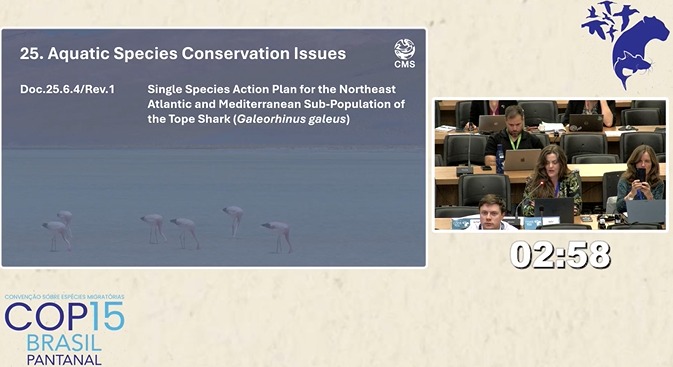
For a detailed update of all the decisions that were discussed, sent for further review or forwarded to the COP plenary for adoption (including Multi-species Action Plan for Amazonian Migratory Catfish – another decision supported by Wetlands International) – read the IISD daily updates.
One of the priority decisions for Wetlands International was on Flyways, which saw our first intervention from the floor by Rafaela Nicola, Director of Wetlands International Brazil.
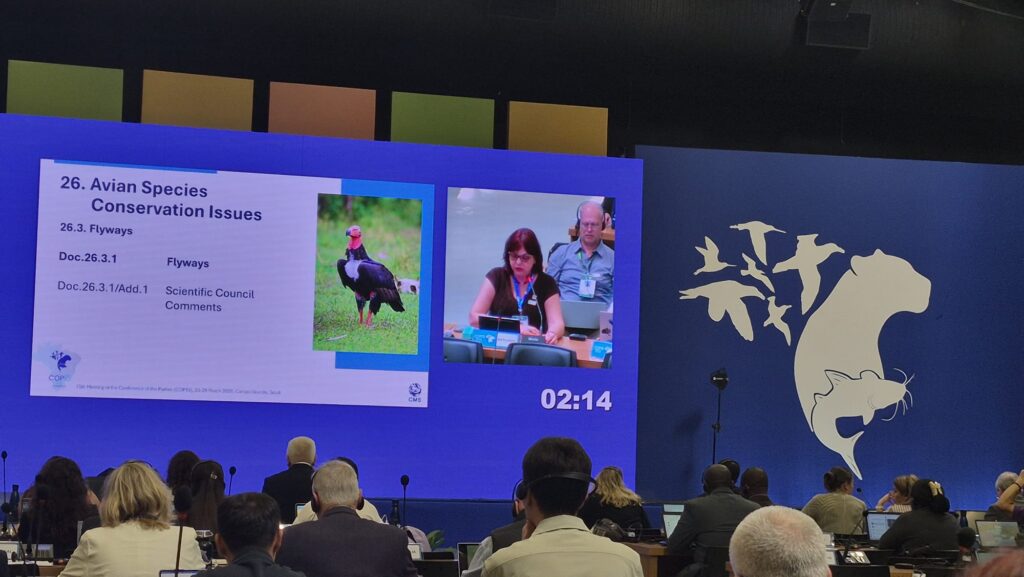
Rafaela Nicola’s intervention:
“As this is the first time Wetlands International takes the floor, we would like to thank our host, the Government of Brazil, for welcoming us to Campo Grande, and for their leadership on the conservation of migratory species, and the wetlands upon which so many depend. We also thank the CMS Secretariat for their continued support and dedication.
We welcome the important work by the Flyways Working Group in enhancing flyways action. And we highlight the value of flyway expertise – and of taking a flyway and swimway approach – to cross-cutting issues such as renewable energy and ecological connectivity.
We note that paragraph 12 of the amended resolution, RECOMMENDS that parties enhance and strengthen monitoring of migratory bird populations and the important sites upon which they rely. Examples of key data sources that underpin the implementation of this resolution, and flyways conservation more widely, include:
The International Waterbird Census: celebrating its 60th anniversary this year, involving tens of thousands of dedicated volunteers, scientists, and partners, and inviting donations.
·The new Global Waterbird Estimates Partnership: established by the Convention on Wetlands COP last year, tasked to produce waterbird population estimates in 2027 and regularly for the longer term, and which urgently needs additional funding.
We look forward to deepening collaboration with parties, observers and others to implement this resolution and to enhance the impact of flyways initiatives, agreements and partnerships around the world.“
Day 3: Negotiations rolling on as side events highlight the Pantanal
Another long day for the delegates as the Committee of the Whole (all you need to know is that it is a very important cog in the wheel of the COP) moved through a long list of agenda items (detailed info from IISD’s Earth Bulletin Network here). The CoW (as it’s known!) spent much of the day in the depths of the ocean, but did find time to discuss a few other issue, including a draft decision on freshwater fish, which Wetlands International and partners support.
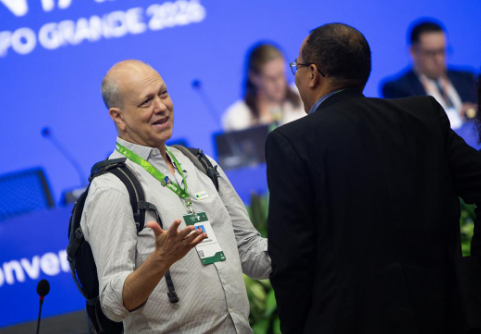
Our delegation was divided between the plenary debates (see Romain Baigun in the IISD photo above) and a number of critical side events.
First up was an event co-hosted by Wetlands International and Mupan on wetland governance, together with the Ministry of Environment and Climate Change of Brazil and CEMAVE/ICMBio. The session highlighted how civil society, scientists and governments can work together to strengthen ecological connectivity and protect migratory species across the Paraguay–Paraná river and wetland system.
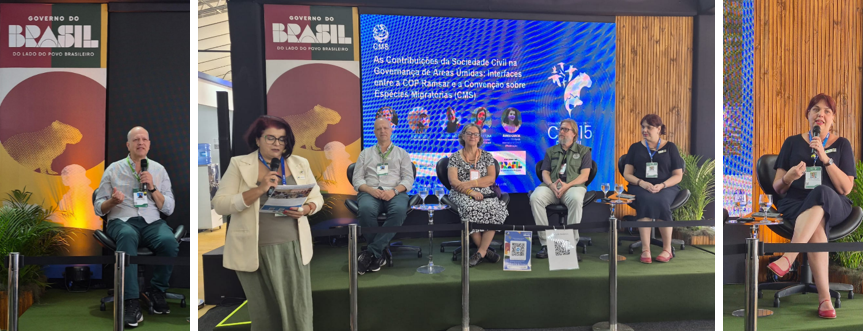
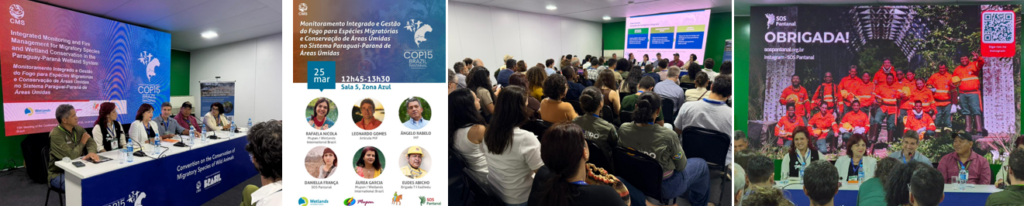
Wetlands International also co-organized a special session focussed on fire management in the Pantanal, bringing together different perspectives on prevention, response and ecosystem resilience in one of the world’s largest wetlands.
The jam-packed session featured the participation of Indigenous leadership, including Chief Eudes Abicho, from the Kadiwéu Territory, reinforcing the importance of traditional knowledge and frontline experience in addressing fire challenges.
“The increasing frequency and intensity of fires in the Pantanal demand integrated responses that combine local knowledge, science and coordinated action. What we are building in the territory can inform broader strategies for wetland conservation globally,” said Áurea Garcia, General Director of Mupan and Policy Coordinator at Wetlands International Brazil.
Day 2: Migratory Freshwater Fish in Freefall (Tuesday 24th)
Talk about starting Day 2 in Campo Grande with some pretty gloomy news: some of the longest and most important migrations of freshwater fish are rapidly collapsing, according to a new CMS study. The assessment identifies 325 migratory freshwater fish species as candidates for coordinated international conservation efforts, highlighting a largely overlooked biodiversity crisis unfolding across the world’s shared river basins. These species face accelerating declines driven by dam construction, habitat fragmentation, pollution, overfishing and climate-driven ecosystem changes.
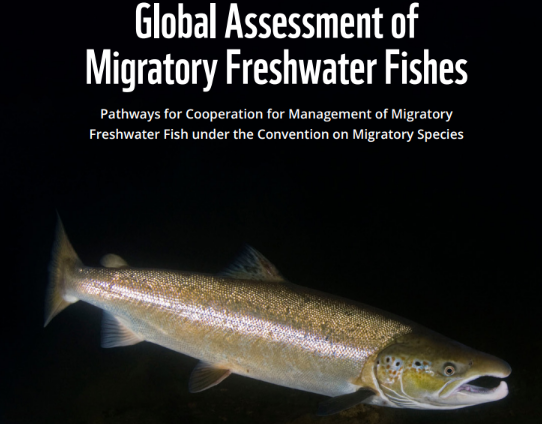
The Global Assessment of Migratory Freshwater Fishes finds that migratory freshwater fish — a group of species that maintain river health, underpin some of the world’s largest inland fisheries, and sustain hundreds of millions of people — are among the most imperilled wildlife on the planet.
But the assessment is not all doom and gloom: it is also an urgent call to action for the Parties at COP15 – and their governments back home, including clear recommendations on protecting and restoring rivers to safeguard migratory routes.
As for the day’s agenda, the COP covered a lot of ground and was technically ahead of schedule – although mostly by diverting items to the cross-cutting issues working group. Some delegates worry that by pushing off so many items, more work will pile up at the end. But that would not be unusual for a COP! As always, the best place for detailed updates on the negotiations is via the excellent IISD updates.
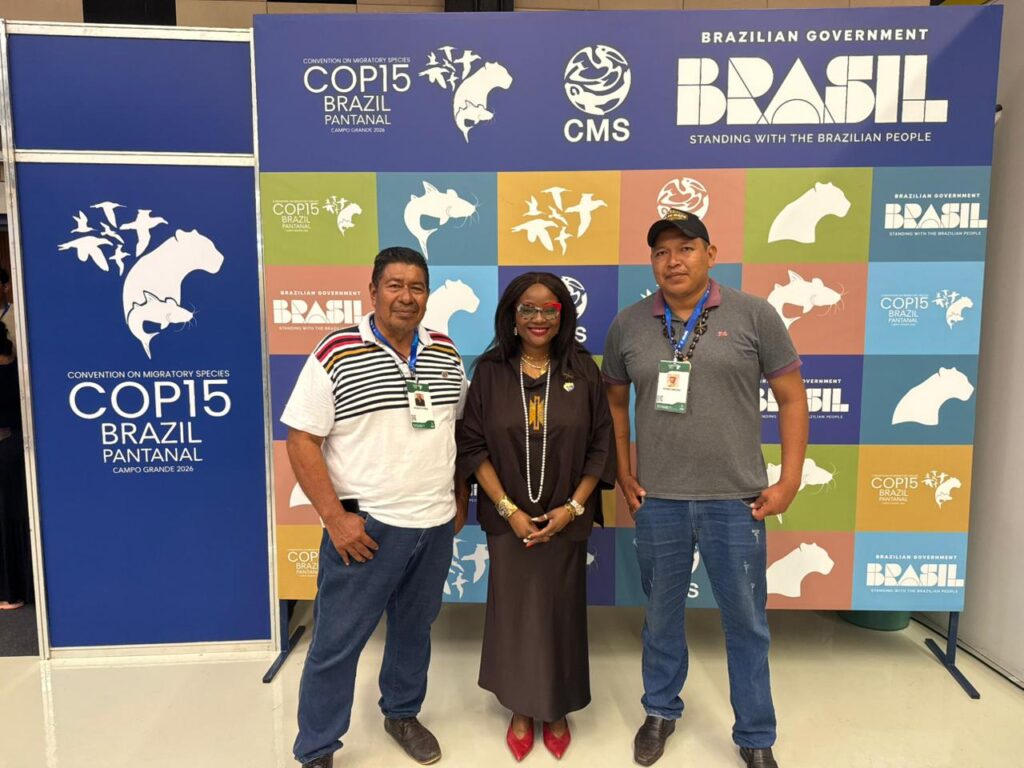
Meanwhile, the Wetlands International delegation was working the corridors and participating in events, including facilitating a meaningful moment by connecting Indigenous leaders from the Kadiwéu Territory with the Ramsar Secretary General, Dr Musonda Mumba.
Day 1: Pantanal is talk of the COP (Monday 23rd)
The first COP of a year jam-packed with them kicked off in Campo Grande, Brazil – on the doorstep of the Pantanal, the world’s largest tropical wetland – and one of Wetlands International’s flagship landscapes. It also gave it’s name to the Pantanal Declaration, which was adopted during the High Level segment and which, among other things:
- highlights the role of wetlands and freshwater systems for humanity and for nature,
- reiterates the contribution of Indigenous Peoples and local communities,
- encourages the inclusion of measures for the protection of migratory species in National Biodiversity Strategies and Action Plans, and
- calls for the provision of resources to these ends.
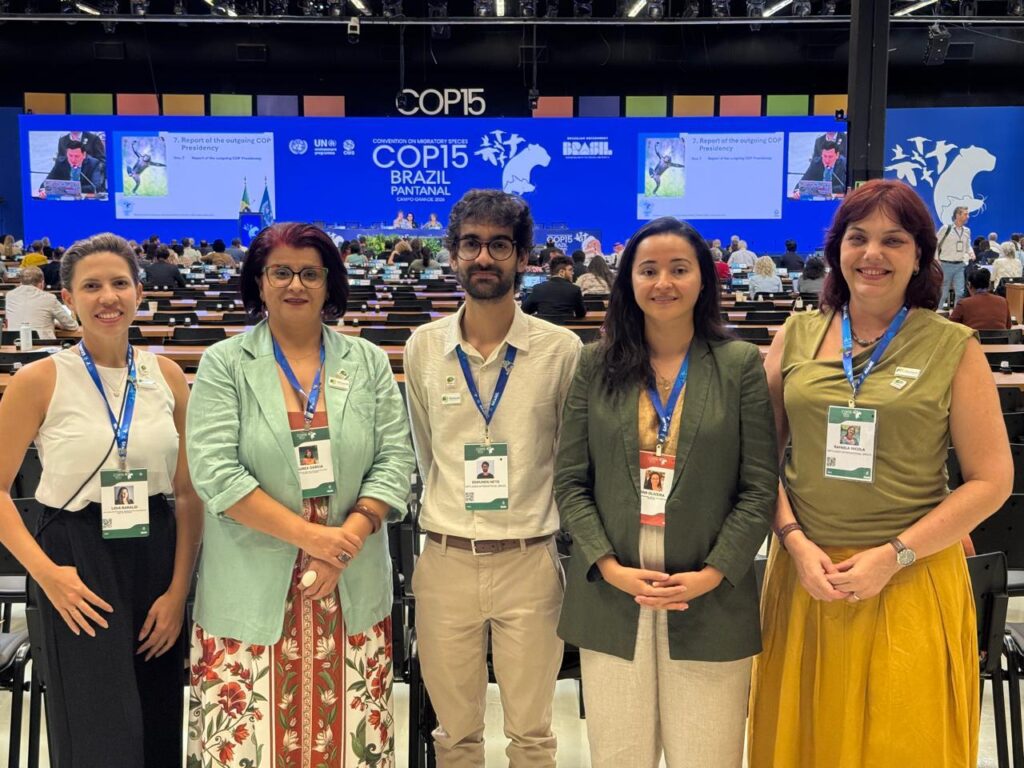
And our fantastic Wetlands International delegation was there from the start!
In her opening remarks, Marina Silva, Brazil’s Minister of Environment and Climate Change, highlighted the significance of hosting COP15 at the gateway to this iconic wetland, which is vital for many migratory species as well as sustaining a wealth of other wildlife. She urged delegates to take decisive steps to ensure migratory species continue flying, swimming, and crossing borders and bridges, for their sake and ours. Critically, she also pointed to this COP as an opportunity to “rekindle the light of multilateralism” – which is central to reversing the ongoing loss of migratory species.
Speaking of species loss, the CMS Executive Secretary Amy Fraenkel highlighted the interim State of the World’s Migratory Species report, which describes current extinction risks and population declines, and urged delegates to redouble efforts to cooperate across borders to achieve the Convention’s goals.
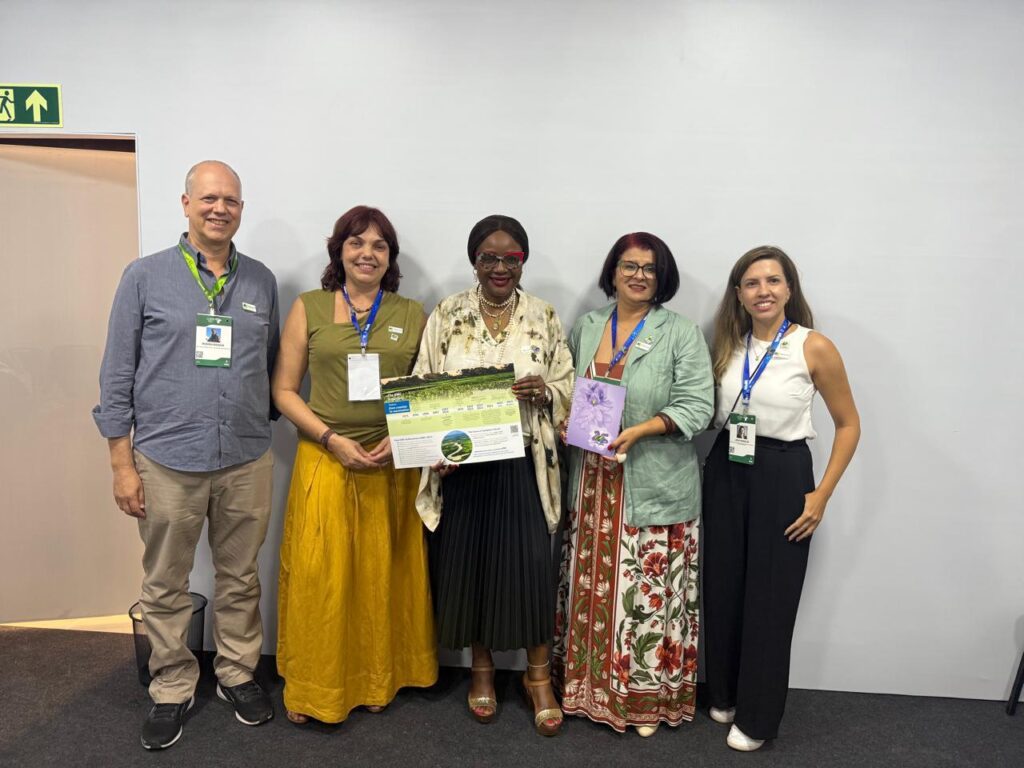
During the high level panel, the Ramsar Secretary General, Dr Musonda Mumba, made a compelling call for investment in protecting and restoring wetlands to safeguard migratory species and their ecosystems – which underpin our societies. Later, she met with our delegation, which focused on strengthening international cooperation around the Paraguay–Paraná Wetland System, advancing the Ramsar Regional Initiative, and reinforcing transboundary dialogue and wetland governance.
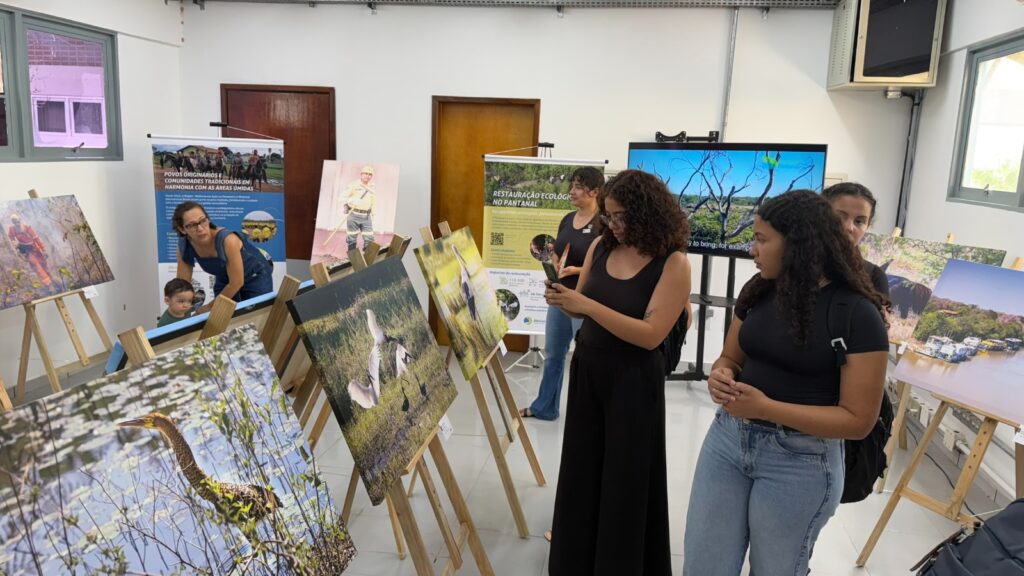
Among lots of other advocacy and events, Wetlands International also opened a photo exhibition “Pantanal: Landscapes and lives in motion”.
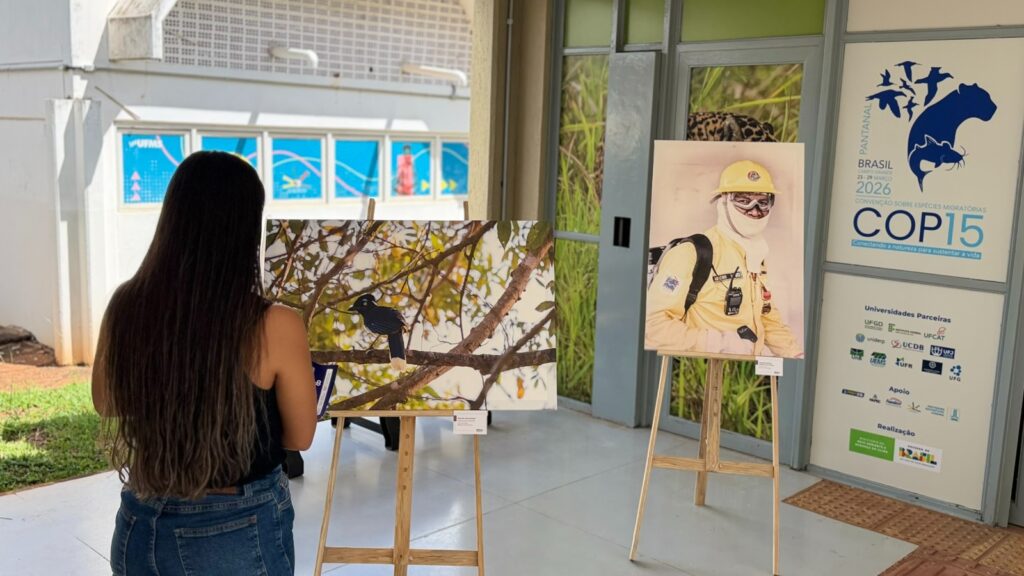
Full of beautiful photos (many from our very own, Joeri Borst), the exhibition presents the Pantanal as a living territory shaped by water, fire and people – highlighting its remarkable biodiversity (over 4,700 species!) and the role of Indigenous Peoples and local communities in protecting the biome.