

Camargue: a jewel under pressure
By Jean Jalbert, Director General, Tour du Valat
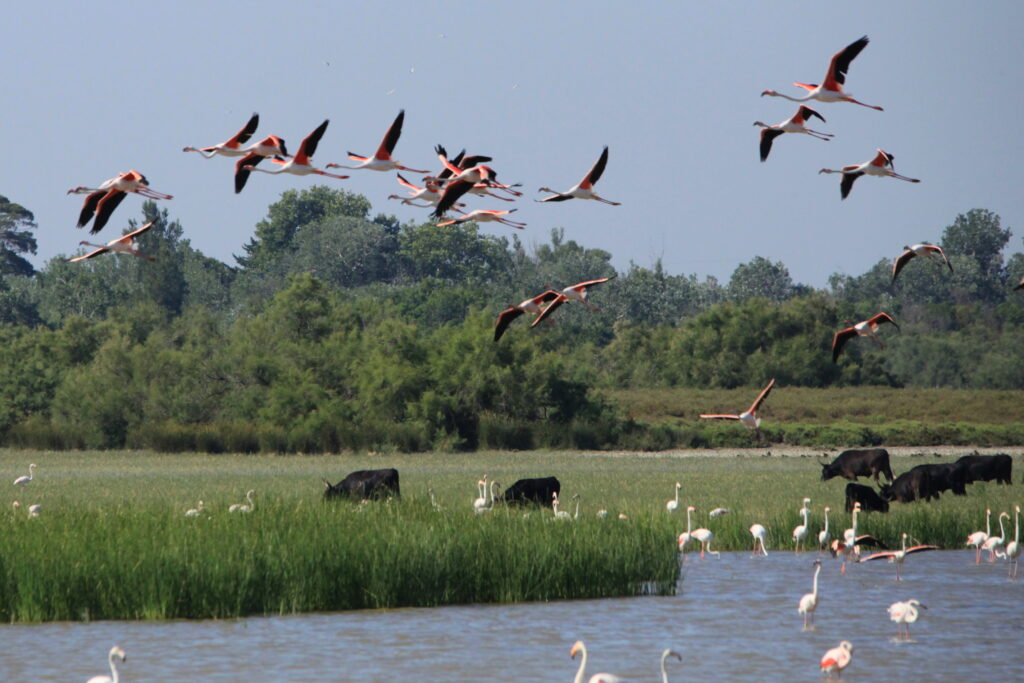
As spring settles in after an exceptionally wet winter, the Camargue in southern France welcomes tens of thousands of birds returning from Africa, revealing its distinctive palette of colours, sounds and scents. Every moment is an invitation to contemplate this flourishing natural world, the result of a unique alchemy combining powerful natural processes with human activities that has shaped this wetland landscape.
A natural heritage of international importance
The Rhône delta is one of the largest and most diverse wetlands in Europe and the Mediterranean. Located along major migratory routes, this iconic wetland is home to 400 bird species and shelters 103 threatened species listed on the European Red List of the IUCN. At the heart of a biodiverse “golden triangle” with the Crau and the Alpilles, the Camargue is internationally recognised for its ecological value. The French State recognised this early on: from the 1970s, it assigned the Camargue a primarily environmental role, while to the east, the Fos-Berre area was set on an industrial path, and to the west, Languedoc-Roussillon was dedicated to tourism development.
Over the decades, this environmental priority has been reinforced. In 1986, the Camargue became the first French site designated as a Wetland of International Importance under the Ramsar Convention. Today, it is covered by an exceptional variety of protection statuses and labels recognising its unique ecological value, including UNESCO Biosphere Reserve, Regional Natural Park, multiple nature reserves, sites managed by the Conservatoire du Littoral…
One might therefore assume it is safeguarded from pressure. The reality is quite different.
A proliferation in infrastructure projects and a democratic deficit
Today, the Camargue faces mounting pressures. Several infrastructure projects threaten its integrity: a very high-voltage power line (THT) crossing both the Camargue and the Crau, a superhighway project impacting some of the Camargue’s rare peatlands, and a bridge facilitating heavy lorry traffic through the heart of the delta. Considered individually, each project already raises serious concerns. Taken together, their cumulative impacts could fragment habitats, disrupt hydrological balances, increase risks for local communities, and reduce the benefits they derive from a protected Camargue.
Beyond ecological impacts, another fracture is emerging: that of democratic dialogue.
Consultation efforts have indeed been undertaken, but to little effect. Despite clear opposition from citizens, protected area managers, farmers and other local stakeholders, the State has maintained its position and refused to explore proposed alternatives.
During the public debate organised in 2025 by the National Commission for Public Debate (CNDP) on reindustrialisation and decarbonisation projects in Fos-Berre, strong opposition was voiced against the overhead THT line, given its potential impacts on the environment, landscapes and local economy. An alternative solution was proposed (source: public debate report).
However, following the debate, the State maintained its initial position, asserting the need to deliver an additional 4 GW of power capacity by 2030, achievable within that timeframe only via an overhead line. The CNDP’s recommendations, notably to initiate a conciliation process to develop a balanced solution, were not followed. Responses concerning the industrial rationale of the territories, raised during the debate, remain vague and overlook critical aspects such as sufficiency and the multiple roles of these areas.
The situation is similar for the Arles superhighway project. Following the public inquiry held in December 2025, the Commission’s opinion was unequivocal: it issued an unfavourable ruling on the project’s declaration of public utility, and a strongly unfavourable one regarding its socio-economic, environmental and health impacts. Despite these conclusions, the regional prefect has recently confirmed the State’s intention to proceed with the project.
Ignoring the outcomes of consultation processes undermines confidence in democracy. Such decisions conflict with the right to public participation in environmental decision-making (Article 7 of the French Environmental Charter, as well as the international framework of the Aarhus Convention). This situation echoes the warnings raised by the United Nations Special Rapporteur on Environmental Defenders, Michel Forst, who, in his 2024 report, denounced an erosion of democratic safeguards and an increasingly weakened public participation, particularly in France.
Rethinking solutions to meet today’s challenges
The challenges are real, but the responses must not pit economy against environment, nor energy transition against natural heritage. They must be grounded in principles of energy, land and water sufficiency, and must definitively stop treating biodiversity as an adjustment variable.
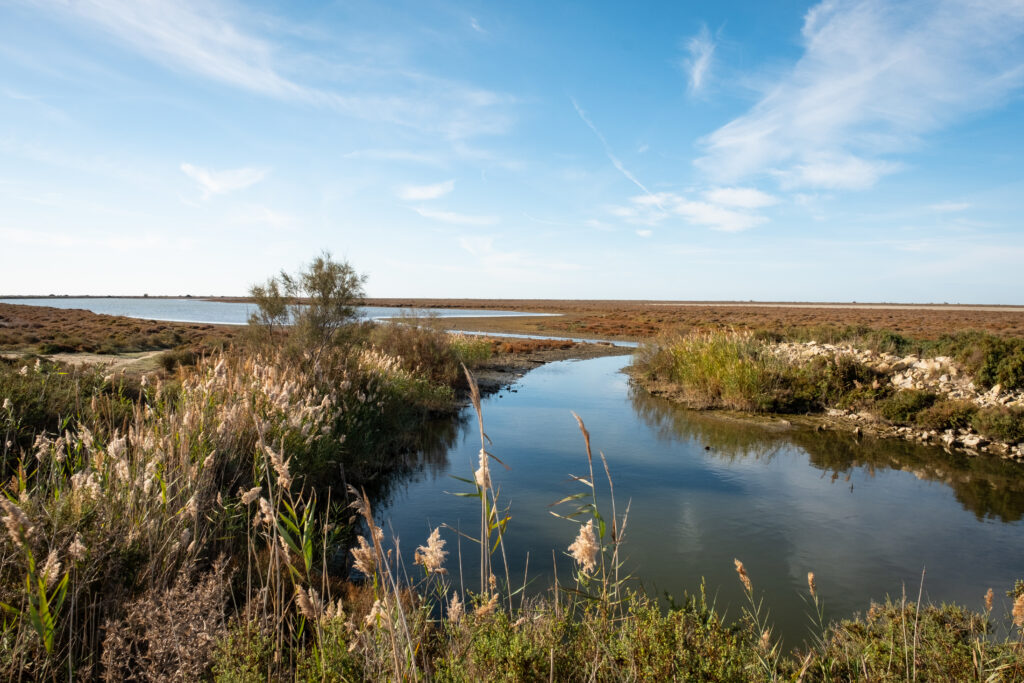
The Camargue, a low-lying delta at the mouth of one of Europe’s most powerful rivers, lies at the heart of the challenges of this century. Its wetlands are not only the foundation of the region’s ecological, agricultural and cultural wealth; they also serve as vital climate buffers, major carbon stores, and a form of “life insurance” in the face of future change.
It was here in the Camargue, at Tour du Valat, under the impetus of Luc Hoffmann, that the international movement for wetland conservation emerged in the late 1950s, leading to the creation of the Ramsar Convention, the first multilateral environmental agreement.
As the 67th Standing Committee of the Ramsar Convention takes place this week, a critical question arises: will France rise to its commitments and truly protect this jewel?