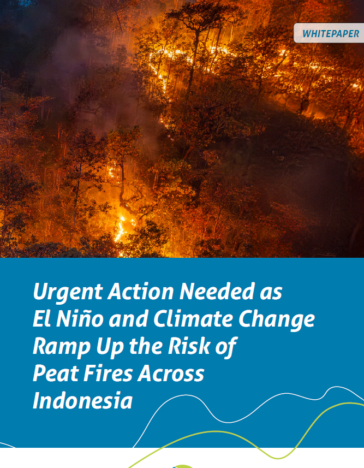

Urgent action needed as El Nino and climate change increase risk of peat fires in Indonesia
Wetlands International White Paper calls for urgent measures to reduce the risk of another year of devastating fires in peatlands across Indonesia and another haze crisis across the region.
Indonesia is facing a growing risk of severe peat fires in the coming months, with potentially devastating consequences for people, biodiversity, economies and the global climate, according to a new white paper released by Wetlands International.
The paper warns that a strengthening El Niño, rising temperatures and continued peatland degradation could spark another catastrophic fire season. While the exact severity remains uncertain, the window to reduce the risks is rapidly closing.
Indonesia is home to around 13.4 million hectares of tropical peatlands—among the largest in the world. These ecosystems store vast amounts of carbon, regulate water, support biodiversity and sustain local livelihoods. But decades of drainage, land conversion and repeated fires have left between four and six million hectares degraded and increasingly vulnerable to burning.
Unlike ordinary forest fires, peat fires burn deep underground, smouldering for weeks or even months. They release enormous quantities of greenhouse gases and toxic smoke while being extremely difficult to extinguish. Healthy peatlands are naturally resistant to fire because they remain waterlogged, but once drained they become highly flammable.
Lessons from the past
The white paper points to the devastating 1997–98 peat fire disaster, when around 9–10 million hectares burned across Indonesia. The resulting smoke haze affected more than 200 million people across Southeast Asia, disrupted transport, caused widespread respiratory illness and released massive amounts of carbon into the atmosphere. A repeat of such an event today would have severe consequences. The report highlights risks including:
- Danger to life from the fires as well as serious health impacts from toxic smoke across the region;
- Massive greenhouse gas emissions that would accelerate climate change;
- Further destruction of globally important peatland biodiversity, including habitat for endangered species such as orangutans;
- Billions of dollars in economic losses; and
- Permanent degradation of peatlands, making them increasingly unsuitable for agriculture and more prone to future flooding and fires.
Action can still prevent disaster
Despite the heightened risks, Wetlands International stresses that a major fire crisis is not inevitable. Immediate action can significantly reduce the likelihood and severity of peat fires.
The white paper calls on governments, land managers, companies, communities and donors to strengthen fire preparedness before the dry season intensifies. Recommended actions include restoring water levels in drained peatlands, repairing rewetting infrastructure, strengthening early warning systems, and supporting community fire prevention and response.
Beyond emergency measures, the organisation calls for sustained investment in peatland restoration, climate-smart livelihoods such as paludiculture, stronger community fire management, and integrated policies that recognise peatlands as essential infrastructure for climate resilience, water security and biodiversity conservation.
Investing in resilience
Preventing peat fires is far more effective—and far less costly—than responding once they are burning, the white paper concludes. By protecting and restoring peatlands today, Indonesia can reduce disaster risk, safeguard communities, strengthen food and water security, protect biodiversity and advance its climate commitments.
As climate change increases the frequency of extreme weather, investing in resilient peatlands is becoming an increasingly urgent priority—not only for Indonesia, but for the region and the global climate.