

Wetlands and water security
Water is life – coursing through ecosystems, sustaining different life forms, supporting agriculture and livelihoods, driving economies, and safeguarding human well-being.
But the world is facing a water crisis with over half the population experiencing water shortages for at least one month per year. And the situation is worsening as the climate crisis disrupts the water cycle, impacting societies, economies and ecosystems across the globe. Everyone understands the urgent need for action but discussions around water security often overlook an absolutely critical component – the freshwater ecosystems that store and supply water.
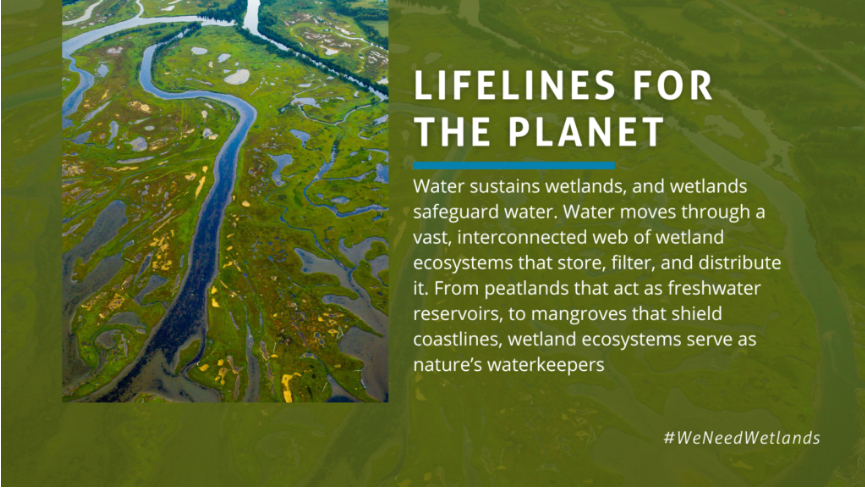
Water moves through a vast, interconnected web of wetland ecosystems that store, filter and distribute it. From peatlands and lakes that naturally store water to rivers that channel it from the mountains to the sea and healthy coastal ecosystems that act as a buffer against saltwater intrusion, wetland ecosystems serve as nature’s waterkeepers, regulating its flow, replenishing supplies, and underpinning security and resilience.
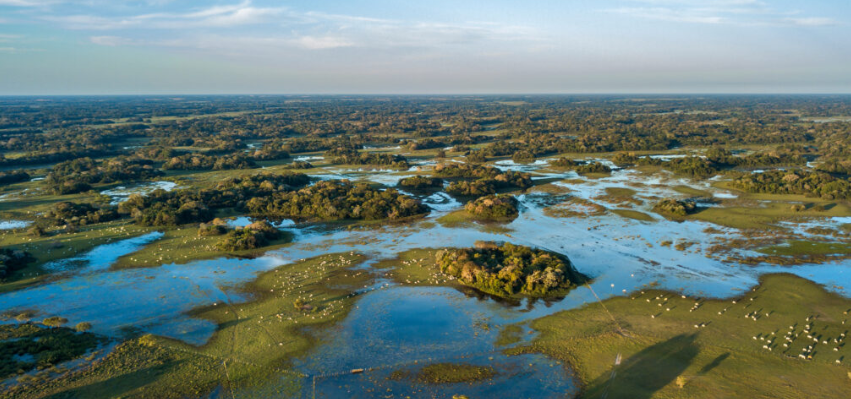
The relationship between wetlands and water
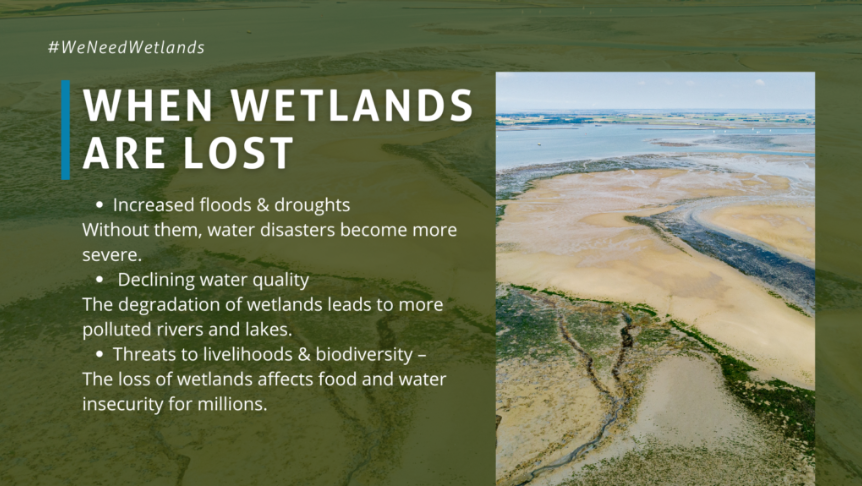
The hydrological cycle continuously moves water through the atmosphere, land, and oceans. Wetlands act as regulators within this system, slowing water movement to prevent rapid runoff, minimising soil erosion, and ensuring gradual release. By storing and filtering water, they reduce flood risks, recharge groundwater, and maintain stable flows essential for both human and ecological resilience.
Beyond regulating water availability, wetlands are also among nature’s most effective water filters. They trap sediments, break down pollutants, and remove excess nutrients, improving water quality. In fact, research explains that wetlands can remove up to 90% of sediments present in runoff. wetlands can remove up to 90% of sediments present in runoff.
A slideshow with 7 images
The slider is set to loop infinitely.
How wetlands ensure water resilience
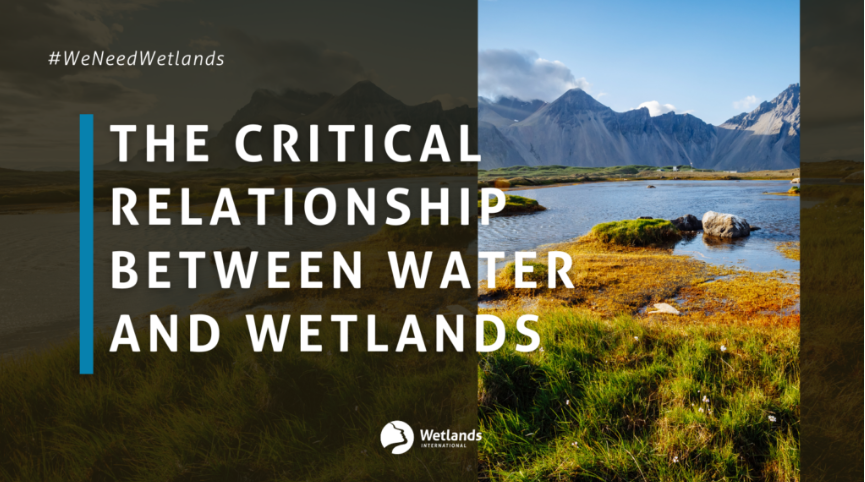
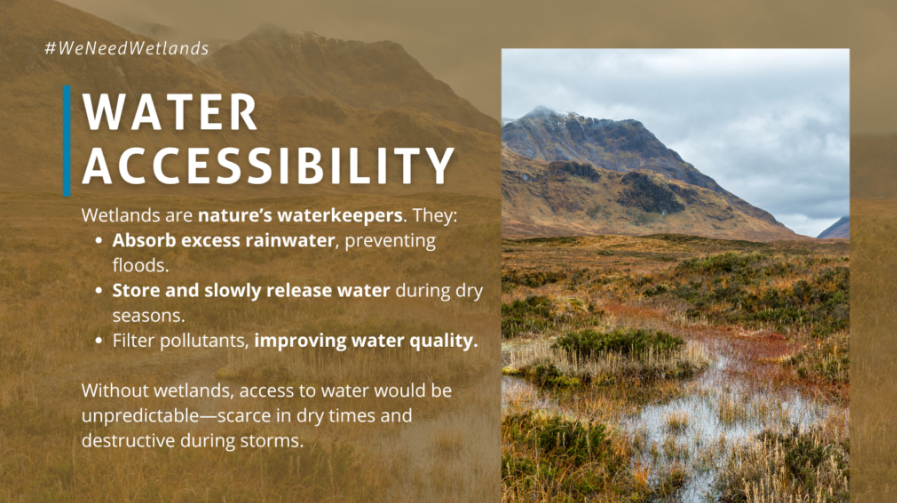
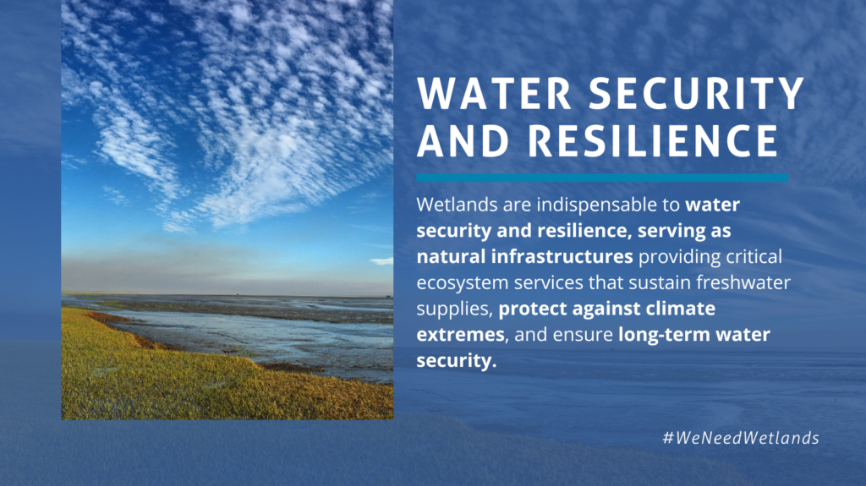
Wetlands are indispensable to water security and resilience, serving as natural infrastructures providing critical ecosystem services that sustain freshwater supplies, protect against climate extremes, and ensure long-term water security.
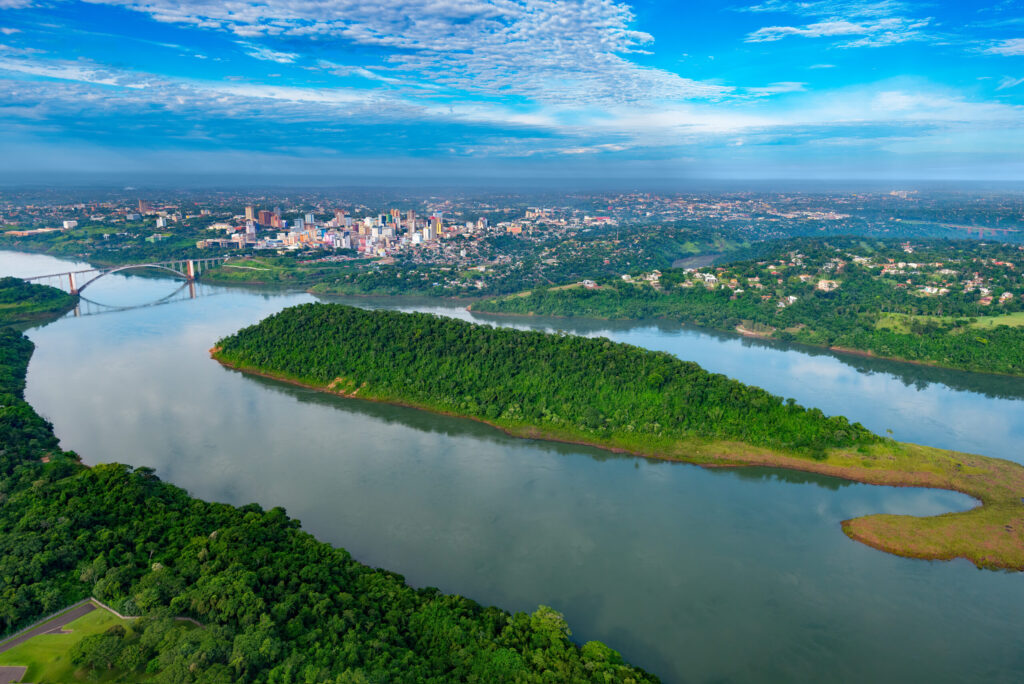
Rivers are the world’s natural water pipes, carrying water from the mountains to the sea, while lakes are vast natural reservoirs. Around two billion people still get their drinking water from rivers.
Meanwhile, peatlands and marshes hold vast amounts of water in nature, absorbing excess water in wetter seasons and slowly releasing it over time to maintain steady river flows and help alleviate droughts.
Floodplains also act as natural shock absorbers, spreading and absorbing excess rainwater to help mitigate floods, while also replenishing groundwater reserves that sustain communities through dry periods. As water levels drop, these floodplains release stored moisture, ensuring a continuous flow of freshwater for agriculture, drinking water, and hydropower. And for nature.
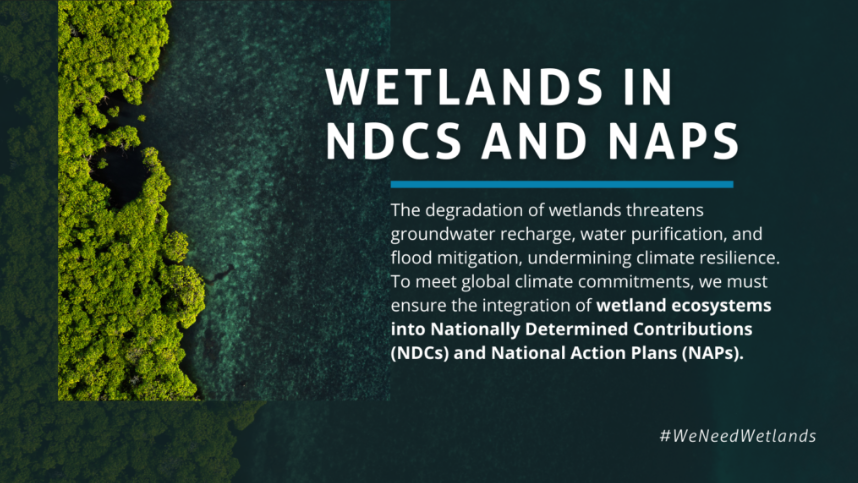
Mangroves, on the other hand, are vital for coastal security. They act as barriers against storm surges, reducing the impact of flooding, while also filtering sediments and pollutants. By stabilising shorelines and preventing saltwater intrusion, mangroves help protect freshwater resources that millions of people rely on.
Wetlands are central to water security
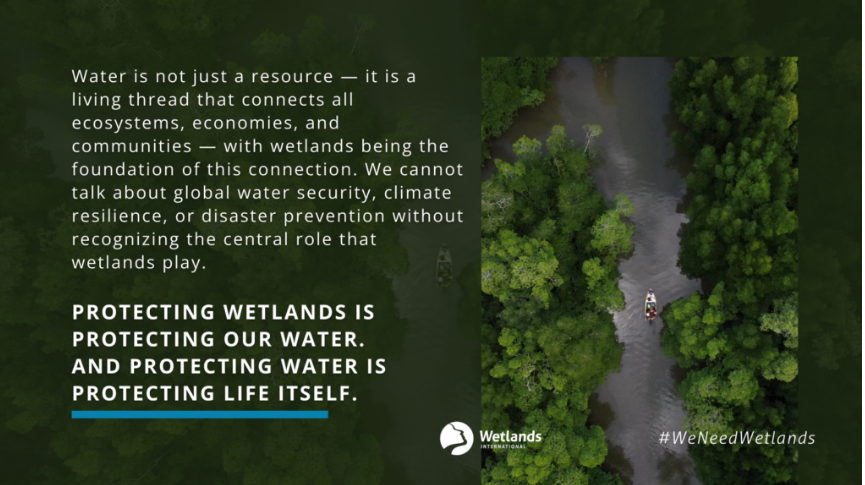
Water is not just a resource — it is a living thread that connects all ecosystems, economies, and communities — with wetlands being the foundation of this connection.
We cannot talk about global water security, climate resilience, or disaster prevention without recognizing the central role that wetlands play. Protecting wetlands is protecting our water. And protecting water is protecting life itself.
Water does not come from a tap, it comes from nature. It comes from wetlands.