

Ethiopia joins the Freshwater Challenge
In a major boost to global efforts to reverse the ongoing loss of freshwater ecosystems and accelerate climate action, Ethiopia, the Climate COP32 Presidency, joined the Freshwater Challenge at COP31 in Antalya, Turkiye – increasing membership of the world’s largest freshwater restoration and protection initiative to 56 countries and the EU.
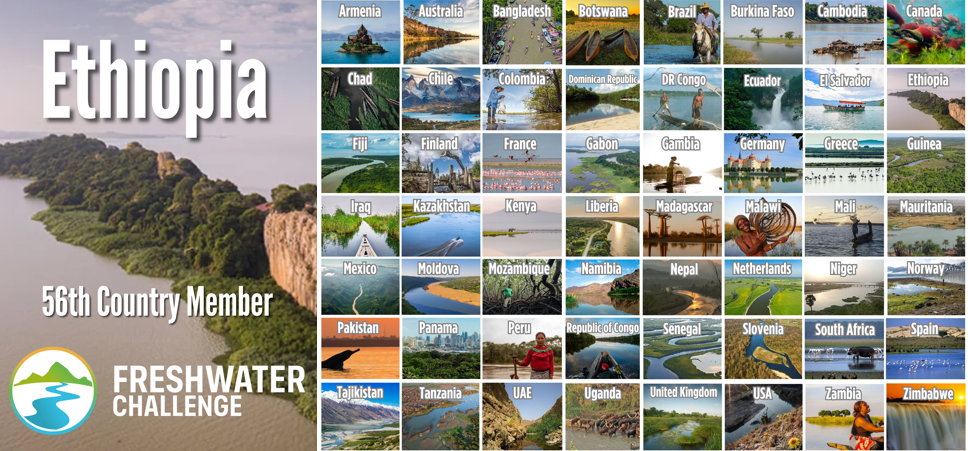
The country-led Freshwater Challenge aims to ensure that 300,000 km of degraded rivers and 350 million hectares of degraded wetlands are under restoration by 2030, and protect important freshwater ecosystems.
Healthy rivers, floodplains, peatlands and other freshwater wetlands are central to climate mitigation and adaptation. But the world has lost over 22% of wetlands since 1970 and they are continuing to be degraded and destroyed at an alarming rate. And at COP31, freshwater ecosystems have been largely overlooked, despite their fundamental importance to our societies and economies, nature and climate action.
“Ethiopia’s decision to join is another big boost to the Freshwater Challenge and the growing global momentum to protect and restore rivers, lakes, peatlands and other freshwater ecosystems,” said Richard Lee, Head of Communications, Wetlands International. “As the COP32 Presidency, it also sends a clear signal about the importance of healthy freshwater ecosystems to climate action.”
COP31 comes at a pivotal moment for freshwater biodiversity. The recent WWF and ZSL Living Planet Report found that freshwater species populations across the globe had crashed by 85% on average since 1970 – far worse than terrestrial or marine species. Meanwhile, the Global Report into progress towards the Kunming-Montreal Global Biodiversity Framework released at last month’s CBD COP17 highlighted that inland waters were lagging behind in both action and ambition.
“Ethiopia has many important freshwater ecosystems, which are essential for its economy, communities and cities, and climate action,” added Lee. “The Freshwater Challenge will support Ethiopia to protect and restore its priority rivers, lakes and other freshwater wetlands, helping to achieve its national targets for water security, biodiversity, sustainable development and climate.”