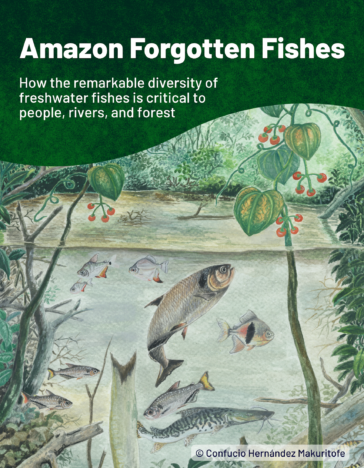

New report shows how the diversity of freshwater fishes in the Amazon Basin is critical to people
Across the vast sweep of the Amazon Basin, thousands of rivers, streams and floodplain lakes flow in an immense, interconnected waterscape—home to an unparalleled diversity of freshwater fishes. More than 2,700 species have so far been recorded, with dozens more added each year as scientific exploration continues.
A new report – Amazon Forgotten Fishes – dives beneath the surface to reveal their life histories, including their range and variety, the roles they play in the ecosystem, their adaptations and their niches. It also explores their place in human society, since millions of people across the Amazon rely on fish for food and livelihoods, and they have a unique place in the sociocultural heritage, histories and identities of Indigenous Peoples and local communities throughout the basin.
Did you know: Two-thirds of the freshwater fishes in the Amazon are found nowhere else on Earth?
Why does the Amazon Basin matter to us?
The fishes of the Amazon Basin are vital for its ecosystems. When species migrate into flooded forests to feed on fallen fruits, they spread seeds across enormous areas, helping to regenerate tree cover. Otherss act as mobile nutrient pumps, regulating primary production and supporting predators higher up the food web.
These same ecological processes that sustain biodiversity also underpin human well-being across the basin.
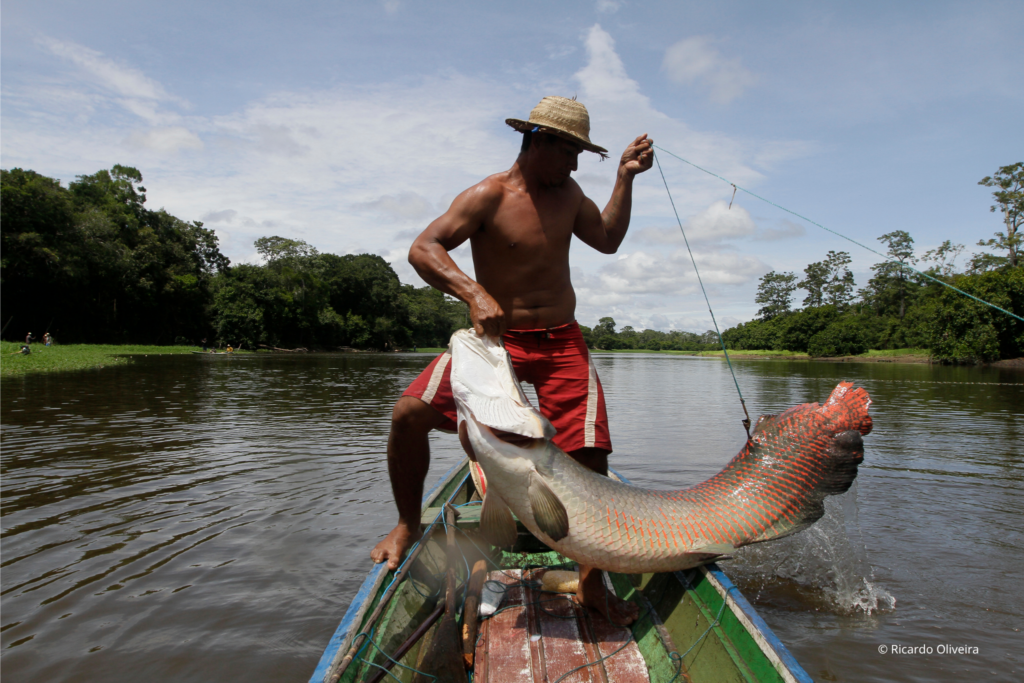
Amazonian fishes are dietary staples. For low-income households in particular, fish are among the most affordable and reliable animal-source foods, providing essential nutrients that support healthy growth.
Sport fishing, too, can provide valuable income for local communities, with well-managed catch-and-release tourist packages potentially raising more money in a week than could be raised in a year of commercial fishing in the same waters. A priority for the years ahead is to ensure that the sector’s expansion remains sustainable, and that local communities are closely involved in its management and share fairly in its benefits.
The Amazon is threatened
But here’s the issue: for decades, in the Amazon, nature has been under attack. The International Union for Conservation of Nature (IUCN) lists 144 Amazonian fishes on its Red List of Threatened Species, and 334 other species are listed as Data Deficient. The true number is likely much higher. Geographic and institutional gaps in national records, coupled with the absence of coordinated, cross-border collaboration, leaves further critical blind spots, making sustainable management much harder.
So why are so many species at risk? The answer is not a surprising one. Freshwater biodiversity in the Amazon is increasingly threatened by several major drivers, and all of them are the direct result of human activities.
Dams, drainage and diversions are all on the rise in the region, fundamentally transforming freshwater ecosystems by fragmenting their connections and changing the flow patterns that are crucial to fishes’ life histories, physiologies and behaviors. Deforestation driven by agriculture, ranching, hydropower and infrastructure disrupts reciprocal relationships between trees and fruit-eating species, and quite literally muddies the waters the fishes swim in, limiting light penetration and clogging their gills. Pollution from other sources, including mining and oil extraction, can severely impair fish feeding, growth, reproduction and survival, while releasing contaminants that move through the food chain and pose risks to human health. Overfishing has been increasing since the 1970s, due to a lack of effective management, monitoring and enforcement systems.
Intensifying the impact of all these threats is climate change, with consistent warming and significant changes in river flows projected through to 2050. In broad terms, as the planet heats, water in Amazonia will become scarcer, particularly during the dry season, which will hit floodplain species and the communities that rely on them particularly hard.
How can we protect the Amazon Basin?
Is the situation a hopeless one? Admittedly, in the face of so many daunting challenges, it would be easy to think that there’s not much we can do to save the forgotten fishes of the Amazon Basin. But we already know what needs to happen to help these fish thrive—nations in the region need to put into practice the principles of the global Emergency Recovery Plan for Freshwater Ecosystems, based on six urgent and coordinated actions:
- Let rivers flow more naturally
- Protect free-flowing rivers
- End unsustainable management of resources
- Protect and restore critical habitats and species
- Prevent and control invasions by non-native species
- Improve water quality in freshwater ecosystems
There are unique opportunities to adapt and enhance these actions to the situation in the Amazon where water, sediments, nutrients and fishes respect no political borders. Safeguarding the fishes and freshwater ecosystems they inhabit requires a paradigm shift away from isolated national strategies and towards a unified, transboundary collaboration and governance framework. This must be anchored in collective action at a basin-wide scale led by governments working hand-in-hand with academia, the private sector, civil society and, importantly, with the Indigenous Peoples and local communities whose daily lives are intimately linked to its natural cycles. Indeed, their central role is critical: the formal recognition of their stewardship and their significant traditional knowledge amplifies the potential for positive change.
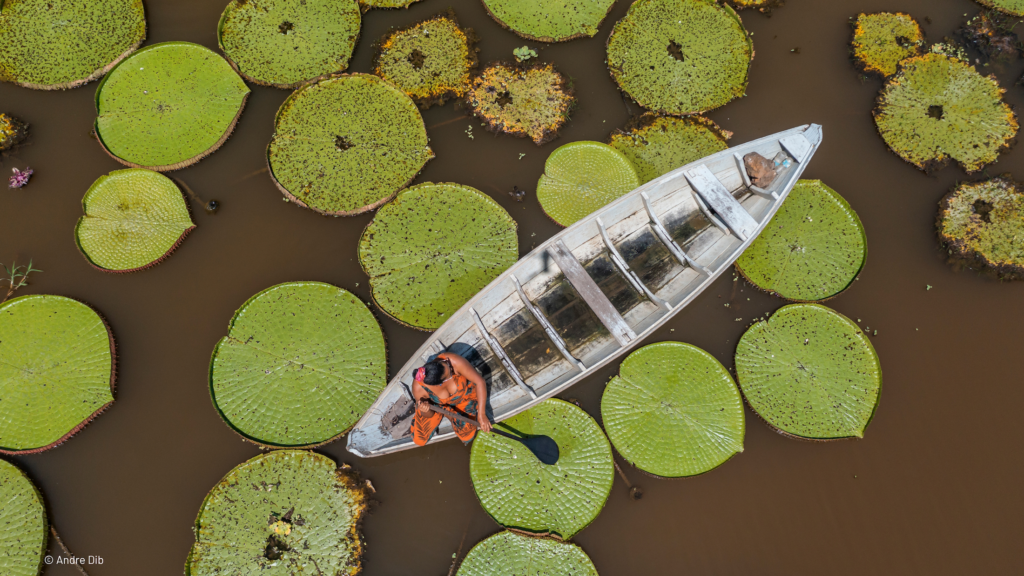
Ultimately, this report demonstrates that the fate of the forgotten fishes of the Amazon relies on our ability to see the basin as they do: as one indivisible, flowing entity. By combining ancestral stewardship and knowledge with modern science, global engagement, robust transboundary governance and collective action to manage cumulative impacts, we can ensure that the Amazon remains a connected and thriving freshwater system far into the future.
Read the report below.