
Safeguarding Coasts and Deltas
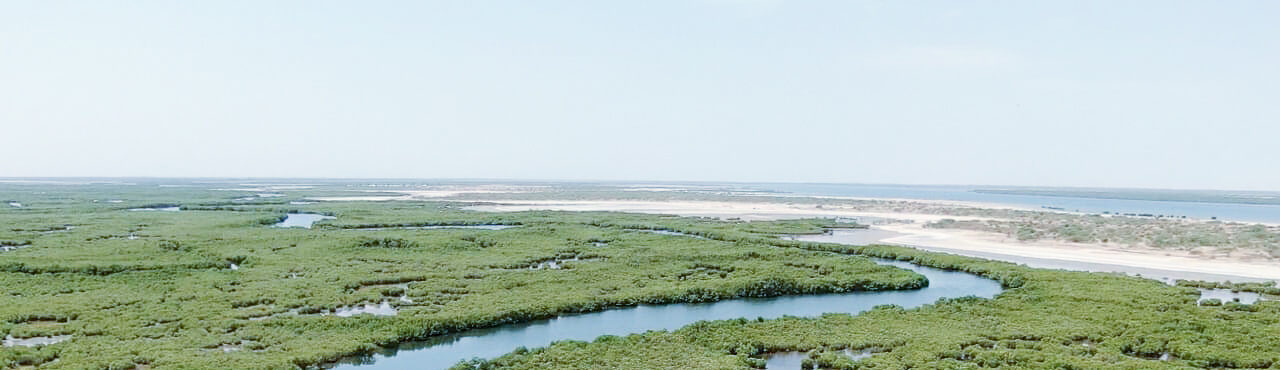
Coastal wetlands such as mangroves, saltmarshes, mudflats and seagrass beds are vital for people and nature. While they are fringe habitats with a proportionally modest global coverage, they protect our coasts, mitigate climate change and provide important fisheries resources to local communities. As connectors between freshwater, terrestrial and marine realms, they provide important corridors that enable diverse species groups to complete their reproductive and migration cycles.
Yet, across geographies these habitats are under strain. According to the Global Wetland Outlook an estimated 15-30% has been lost since the 1970s due to conversion for other land uses, while remaining habitats suffer from degradation due to overexploitation and pollution.
Threats and challenges
Prominent drivers of loss and degradation include conversion to aquaculture, crop and cattle farming, development of plantations (oil palm, paper and pulp) and real estate and industrial expansion. Infrastructure development in river-basins and across wider coastal areas and large-scale sand mining change the hydrology, salinity and sediment balance. Run-off of chemicals from mining, agriculture and aquaculture, organic waste disposal and plastic pollution affect the integrity of coastal ecosystems. Specifically along alluvial coasts subject to drainage and ground water extraction, land subsidence causes land to retreat or even sink, while exacerbating flooding and saline intrusion. Climate change causes coastal squeeze from sea level rise in urbanized areas, increases the incidence of and vulnerability to weather extremes, while causing changes in habitat and species distribution.
Root causes to ecosystem loss that are specific to coastal ecosystems include unclear or conflicting land tenure arrangements in intertidal areas and overlapping jurisdictions that cause inefficient management, resource overexploitation by communities who travel freely across jurisdictional boundaries and lack of enforcement of environmental regulations in poorly governed areas. Further, coastal areas tend to be centres of economic growth with high demand for the development of industries, energy infrastructure and ports roads and shipping lanes. This adds further pressure to already vulnerable areas.
To safeguard and restore coastal wetlands requires decision makers to fully appreciate the values they provide to communities, cities and economies as well as to biodiversity and climate action.
Our strategic approach to safeguarding coastal wetlands
Through interventions oriented in priority landscapes, we aim to safeguard and restore coastal wetland ecosystems as essential features of resilient, productive and diverse coastal landscapes. To achieve this goal, we will work in selected target landscapes that have outstanding values for nature and people, including in some of our twelve flagship landscapes. In these landscapes we will work across different use zones, including strict conservation areas, productive use zones and in some cases urban or industrialized areas. These programs work through landscape partnerships, paying particular attention to the challenging tenurial and jurisdictional issues that are explicit in coastal zones.
Secondly, we aim to ensure that the populations of migratory waterbirds and fish are conserved and where possible improved and that coastal wetlands along their flyways are conserved and restored. This includes development of management plans, policies and legislation at flyway, national and local scales and implementation of interventions in priority sites on the ground. Field interventions can take place in our priority landscapes, but also in priority sites elsewhere. An important focus will be to ensure connected networks of wetlands both within land and seascapes, as well as across the migratory routes of our target species.
Thirdly, we work to enhance the sustainability performance of two key sectors that have a disproportionate impact on coastal wetland environments: coastal and hydraulic engineering and aquaculture. Through collaborations with key players in the sector and their branch organizations we aim to ensure adoption of approaches that consistently avoid and minimize adverse impacts on wetlands and their inhabitants and that promote adoption of nature-based approaches as part of their core business where possible. Interventions on the ground will be oriented at our target landscapes where possible, but as we will follow a sectoral approach, can also be implemented elsewhere.
These pillars build on an overarching foundational goal to increase global attention and commitments for coastal wetlands amongst policy makers, planners and investors and establishing an enabling environment for strengthening policies in our priority countries. By tracking the state of the worlds coastal wetlands and mapping their values, threats and priorities for action we raise the profile of coastal wetlands and set ambitious policy agendas. Best practice guidelines and tools, disseminated via strategic communications and through training programs equip different stakeholders with the information they need to step up their wetland management.