

How Global Mangrove Watch is helping develop a community-based early warning system in Ecuador
-
Global Mangrove Watch
What you know of Ecuador’s diverse landscape probably includes places like the Amazon jungle, Andean highlands, and the wildlife-rich Galápagos Islands. What you may not know is that Ecuador is also home to mangrove forests spanning approximately 1550 km², an area the size of Rome.
But since 1970, Ecuador has lost nearly 30% of its mangroves. Historically, much of the mangrove loss in Ecuador was associated with the expansion of shrimp farming and the conversion of mangrove areas to other uses, particularly during periods when environmental planning and management frameworks were less developed. Pollution and climate change have further increased pressure on these ecosystems. Today, advances in technology, regulation, and management practices have improved productivity in the shrimp sector, creating opportunities to balance sustainable production with the conservation and restoration of mangroves. The challenge now is to scale solutions that protect these critical ecosystems while supporting the livelihoods and economic activities that depend on healthy coastal landscapes.
The good news is that Ecuador has a broad set of enabling conditions to implement successful mangrove projects. It has one of the strongest mangrove legal frameworks in the Americas with mangroves protected under the Constitution, the Organic Environmental Code, and multiple decrees that restrict clearing, require restoration, and enable community stewardship. These conveniently ladder up to its NDCs and 30×30 commitments.
Supporting Ecuador’s community-based mangrove work is the focus of the Ecuador chapter of the Global Mangrove Alliance (GMA) who last year won a USD 1.5 million grant. One of the key deliverables of this grant is to develop and implement a community early warning system. And this is where TNC Ecuador (a member of GMA Ecuador) approached Centro Internacional para la Investigación del Fenómeno de El Niño (CIIFEN) who have in-depth experience with other early warning systems.
CIIFEN is developing an early warning system together with four pilot Custody and Sustainable Use of Mangrove Agreements (AUSCEMs) in the Gulf of Guayaquil, centred on field-based monitoring by mangrove custodians and supported by digital tools for reporting, information exchange and coordination with authorities. Global Mangrove Watch (GMW) is integrated as a source of satellite-based information to support monitoring and provide additional context for field observations. At the same time, mangrove custodians will be able to ground-truth and validate Mangrove Disturbance Alerts (MDA), helping connect satellite observations with on-the-ground information. The mobile and web applications therefore serve as tools within a broader early warning process that links monitoring, reporting, validation, coordination and response.
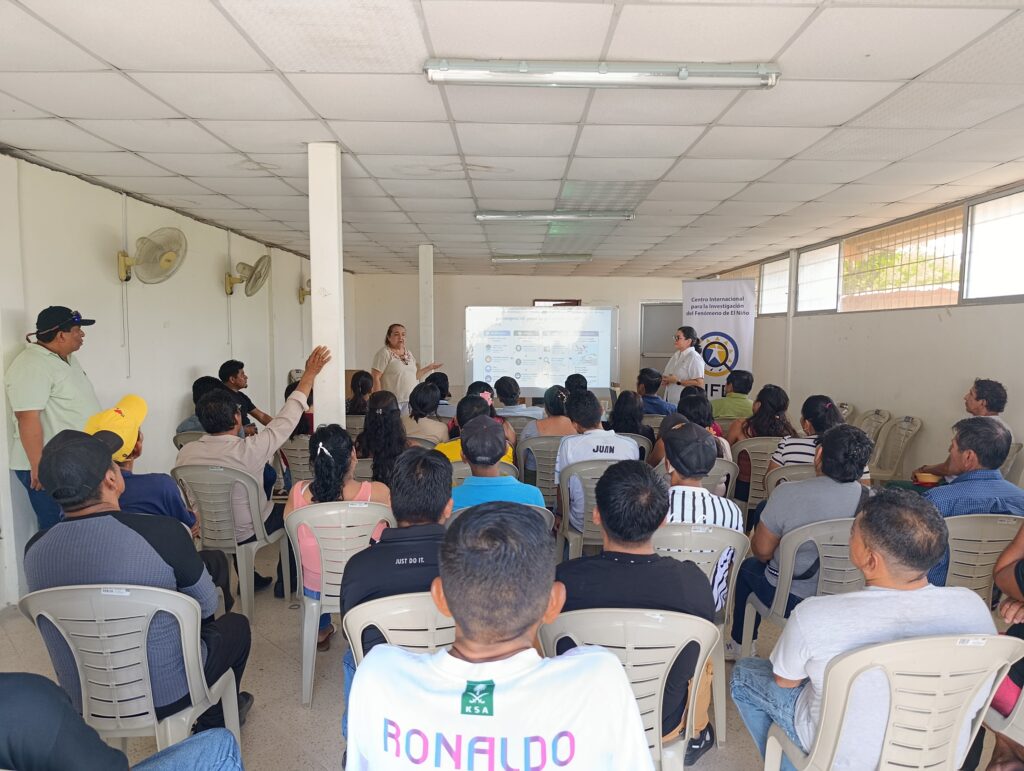
Sebastián Rivera Ruano, Fullstack developer of the early warning system: “Our goal is to create a two-way street: not only opening doors for more people to access Global Mangrove Watch but also allowing GMW to benefit from communities’ insights.”
A slideshow with 2 images
The slider is set to loop infinitely.
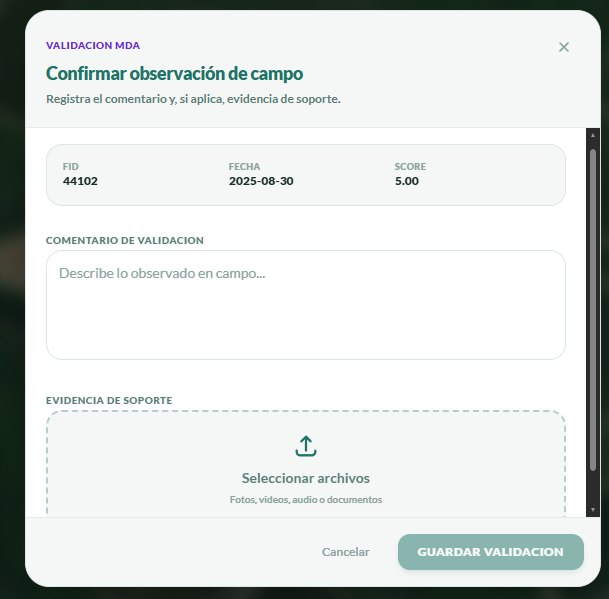
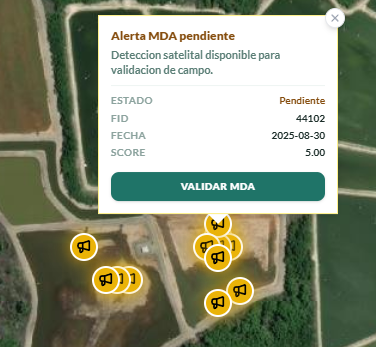
Screenshots of GMW Mangrove Disturbance Alerts (MDA) in CIIFEN’s app, still under development
In particular, this app will integrate GMW’s Mangrove Disturbance Alerts (MDA). It aims to optimize the monitoring and reporting of incidents in communities along the Gulf of Guayaquil. Furthermore, it will allow mangrove custodians to ground-truth and confirm these alerts, and ideally, providing GMW with valuable, crowdsourced feedback to help refine its satellite analysis.
Pier Luiggi Maquilón Lipari , Climate Services Developer, CIIFEN Computer Science: “One of the most important things about early warning systems is that we need them to be more than just technological platforms. Protocols and coordination between stakeholders are of critical importance such that timely and coordinated action can be taken.”
There is keen interest in this early warning system from the government of Ecuador, especially the Subsecretaría Marino Costera y Oceánica (Undersecretariat for Marine, Coastal and Oceanic Affairs). In the past, Global Mangrove Watch was also used to try to validate the Environmental and Energy Ministry of Ecuador’s data on mangrove extent in the country.
“Some of the most useful information available on Global Mangrove Watch for me is data on mangrove blue carbon as well as national and regional climate policies.” Elba Alissie Fiallo Cobos – Coordinator, Coastal Marine Strategy, TNC Ecuador.
Historically, mangroves and Ecuadorians have always shared a close relationship. The forests have provided livelihoods in the form of crabs, black-shelled cockles (conchas negras), timber for construction and fuelwood. They have protected the coast from storm surges and rising sea levels. It is perhaps for this reason that Ecuador has enabled community-based management of mangroves through AUSCEMs and Socio Manglar – a mature, nationally embedded incentive program that channels public and donor finance into community-based mangrove conservation, restoration, and improved livelihoods for ancestral and traditional users.
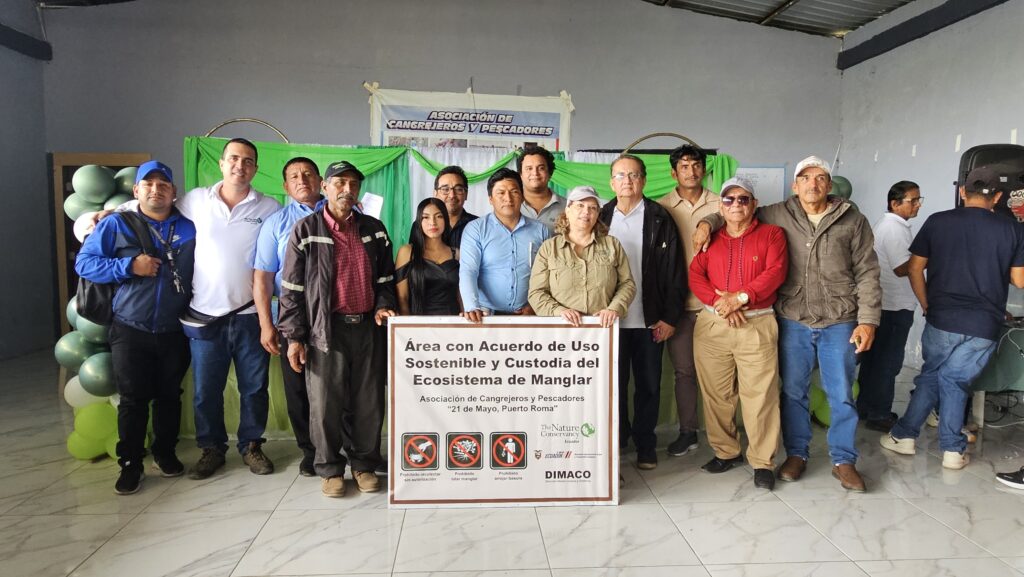
“At TNC Ecuador, we promote collaborative work among local communities, government authorities, academia, and the private sector to advance more sustainable development models that contribute to both mangrove conservation and human well-being, recognising that confrontation between conservation and production is not useful,” says Elba.
Ecuador also has a robust portfolio of ongoing projects and partnerships with other international and local NGO universities, local associations, and private-sector actors, and is already strengthening governance, monitoring, and restoration at scale.
The community-based early warning system in development by CIIFEN for the GMA Ecuador chapter is expected to be available by the end of this year. To supplement its release, a series of in-person trainings and additional video tutorials will be provided to ensure the communities will have the capacities and empowerment for the implementation of the process.
The Global Mangrove Watch is managed by Wetlands International in cooperation with The Nature Conservancy, SoloEO and Prifysgol Aberystwyth University. We are grateful for the support from the Postcode Loterij, Oak Foundation, COmON Foundation, Greenchoice and Dob Ecology.