

270 new hectares of mangroves under ecological restoration in Guinea Bissau
Mangrove restoration is once again underway in Guinea-Bissau, with Wetlands International’s Guinea-Bissau teams and local communities working together to restore degraded mangrove areas across the country. Mangroves are vital to the coastal communities and ecosystems of Guinea Bissau, providing habitat for wildlife, supporting fisheries, protecting shorelines and storing significant amounts of carbon.
The 2026 restoration campaign began on 27 August and will continue until 10 September, with restoration activities taking place in 18 selected sites in Guinea Bissau’s Cantanhez National Park and its periphery. This year’s work covers 270 hectares, contributing to a wider target of restoring 1,000 hectares of degraded mangroves and bringing the total area restored through the programme to around 3,500 hectares.
Ecological restoration approach
The campaign builds on years of mangrove restoration work in Guinea-Bissau, using approaches that work with nature rather than relying simply on planting trees. A key focus is Assisted Natural Regeneration (ANR), also known as Community-Based Ecological Mangrove Restoration (CBEMR). The approach aims to understand and address the conditions that prevent mangroves from naturally returning—particularly disrupted water flows—so that mangroves can regenerate and establish themselves again. The intervention then consists of removing these obstacles and supporting the natural processes already underway. The mangrove thus possesses its own regenerative capacities rather than planting new seedlings.

Collaboration with communities
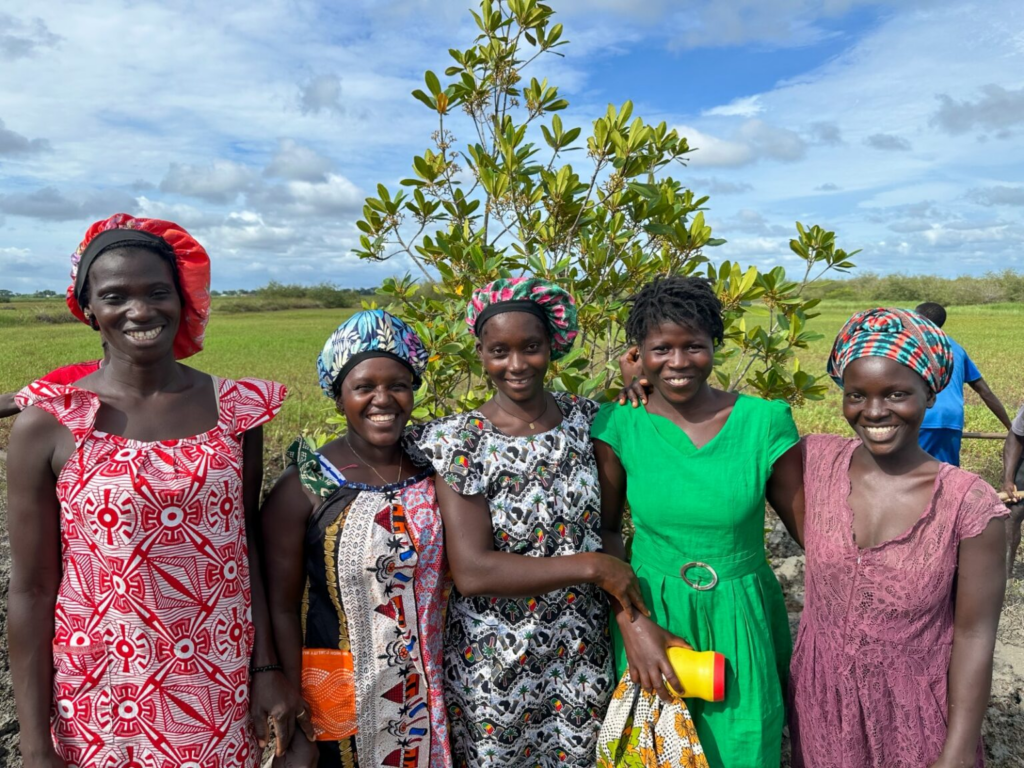
The 2026 activities were officially launched in three local settlements: Cassumba in Cacine, Kauntchintchi in Yemberem, and Weldekeia Wangha. These launch events brought together strong community participation and provided an opportunity to demonstrate the restoration techniques directly in the field. Community members could see how restoration works in practice, discuss the reasons why mangroves have disappeared or struggled to recover, and learn about the actions needed to help restore the natural conditions for mangrove regeneration.
Following these initial demonstrations, community members are continuing restoration activities supported by Wetlands International, local NGOs and National Park staff across the selected localities, from site identification to interventions and monitoring of restored areas.
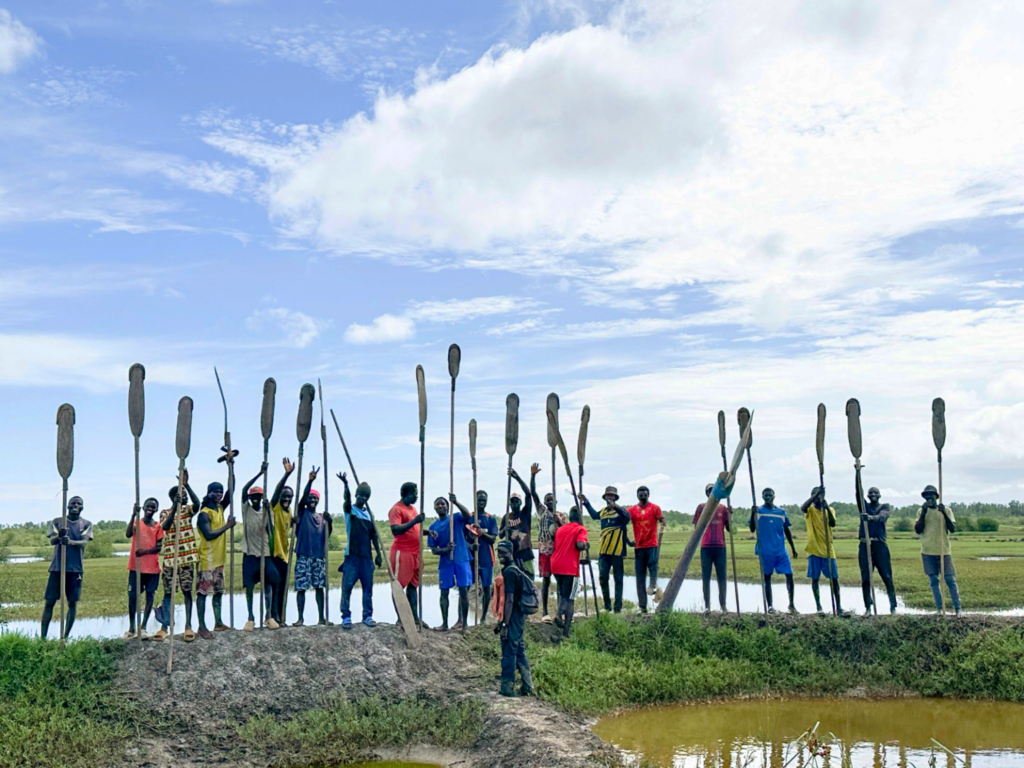
@Nene Balde, Wetlands International Africa
Restoring the right places
Not every degraded area is suitable for restoration. Sites selected for restoration by Wetlands International meet a set of criteria to ensure that restoration is appropriate, additional, and supported by the people who depend on the land and its resources.
The selected sites are mainly former rice fields on tidal wetlands or degraded, deforested areas where mangroves are unlikely to recover fully without support, and have been abandoned from agriculture for at least two years.
The sites are areas where human activity has disrupted the natural hydrology, leaving little or no mangrove vegetation or regeneration. They must also be free from other restoration projects and land or resource-use disputes. Crucially, restoration only goes ahead where landowners and resource users have given their informed consent, and ensure that communities are involved from the very beginning.
This careful approach helps ensure that restoration efforts are focused where they are most needed and where nature can once again take the lead.

Monitoring recovery
Wetlands International is regularly monitoring changes in vegetation, soil, water flow and natural regeneration in the restoration sites to understand whether the mangroves are recovering as expected and whether the restoration techniques are working. As such our restoration teams can learn what is working, identify where additional support may be needed and adapt their approach over time.
Restoring more than mangroves
The current campaign represents another step in a longer restoration journey in Guinea-Bissau. By combining ecological restoration with community participation, the programme seeks not only to bring mangroves back, but also to strengthen local understanding, and ownership of restoration, as well as the livelihoods of the communities that depend on it. Restoring the mangroves therefore brings benefits that extend well beyond the boundaries of individual restoration sites.
Read more about the mangrove restoration programme in Guinea Bissau
Partners and donors
Our mangrove restoration and conservation work in Guinea Bissau is implemented together with Guinea Bissau’s Ministry of the Environment, Biodiversity and Climate Action, IBAP (Institute for Biodiversity and Protected Areas), Face the Future, Proativos, REDE AGIR, AJUTS), and local communities which support the implementation of mangrove restoration, conservation and monitoring activities. In addition, the project will work closely with the BioGuinea Conservation Trust Fund, IUCN, PRCM, the World Bank–WACA programme, PLANTA (the national mangrove platform), and other partners engaged in mangrove protection in Guinea-Bissau.
We are grateful to our donors Greenchoice and DOB Ecology for their support.