
Kenya Mangrove Champions Initiative launches to strengthen science-based and locally led restoration
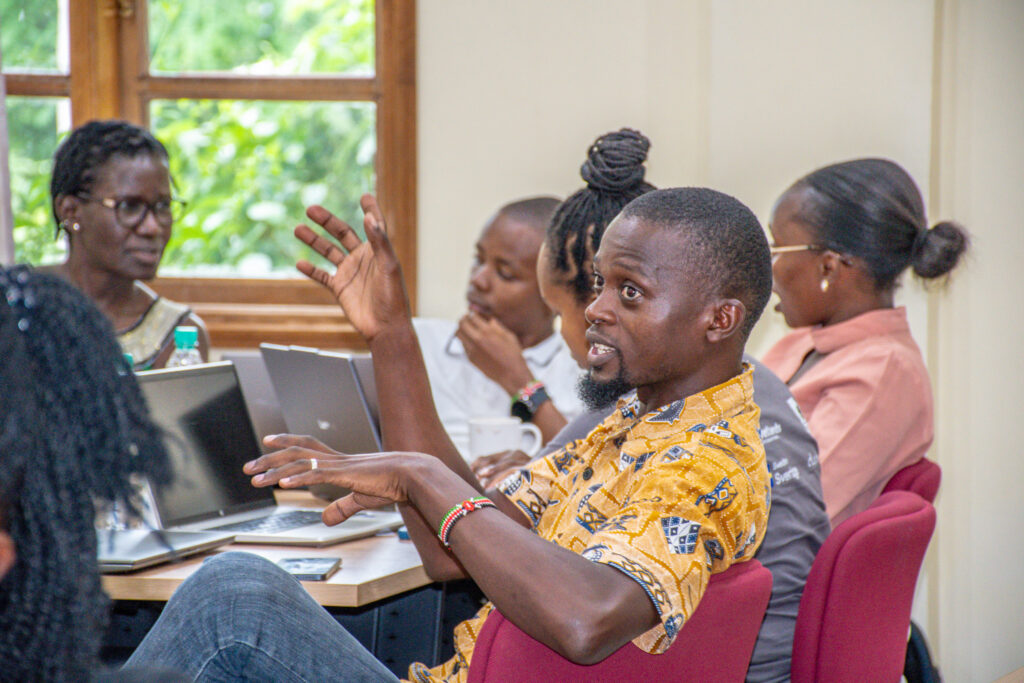
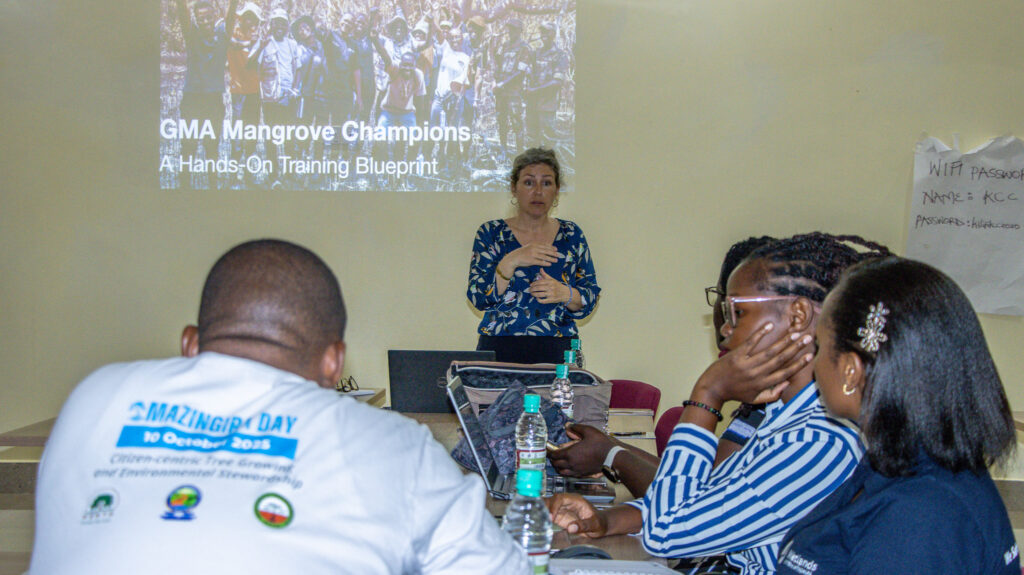
Last week, a diverse group of mangrove practitioners, community leaders, youth mangrove champions, technical experts, government partners and NGO’s gathered in Kenya for the Kenya Mangrove Champions Initiative workshop, hosted by Wetlands International and the Global Mangrove Alliance in Kenya.
The gathering marks the beginning of a shared effort to strengthen mangrove restoration driven by local leadership through science-based and locally led approaches. As global ambition and investment for mangrove restoration continue to grow rapidly, there is an urgent need to build connected communities that can learn from one another and accelerate the adoption of effective, locally grounded mangrove restoration approaches.
Building a connected community on best practice mangrove restoration
The Mangrove Champions Initiative seeks to build a connected community of practitioners capable of moving beyond short-term, fragmented and business-as-usual restoration efforts toward more sustainable and community-driven projects. Because every mangrove landscape is unique, successful restoration requires approaches tailored to local ecological, social, economic and cultural realities. Restoration, as participants emphasized, cannot be separated from livelihoods, identity, and local governance and community priorities.
Central to the initiative is the recognition and support of local leaders —the Mangrove Champions— who are already driving change within their landscapes. Their lived experience, combined with scientific and technical expertise, is essential to designing restoration approaches that are both effective and lasting.
The challenge —and opportunity— is to bridge these dimensions in ways that create lasting impact.
The Global Mangrove Alliance has national chapters around the world including in Kenya, which are supporting effective mangrove conservation and restoration at the national level. Through the Mangrove Champions Initiative, these chapters, starting with Kenya, are now bringing together all these different stakeholders to jointly learn and roll out best practice mangrove restoration.
As such we are creating a connected network of practitioners across sites, committed to learning, collaboration, and locally rooted action.
Elena Roddom, Wetlands International: “This experience was so valuable, all participants were so committed and keen to learn from each other and people felt very comfortable to share their local experience and expertise. As a result established mangrove restoration experts, researchers and government actors learned from young mangrove champions and community leaders that are testing experimental approaches in the field, and vice versa”.
Mangrove restoration expeditions
A key component of the initiative is the organisation of locally grounded mangrove restoration expeditions across priority landscapes. The first expedition will take place next week in Kwale county, near Mombasa.
These field-based learning expeditions will bring together Mangrove Champions, technical experts, NGO’s and government implementation agencies such as Kenya Forest Service at active restoration sites where members of the Global Mangrove Alliance Kenya are already working to restore mangroves. The expeditions are designed to bring the classroom to the field: highly participatory, immersive learning environments where participants feel comfortable discussing challenges, uncertainty, and lessons learned.
Participants will collectively analyse ecological conditions, restoration approaches, and implementation challenges directly within restoration landscapes. They will also explore how to work respectfully and effectively with local communities and jointly reflect on local realities, including power dynamics, community priorities and knowledge, governance contexts, realities and the importance of engaging stakeholders beyond the village lead.
The expeditions are intended to strengthen both ongoing and future mangrove restoration projects in Kenya, while also contributing to broader systems change that improves mangrove restoration impact at scale. As such, they go beyond simple knowledge exchange. They help to foster behavioural change across the restoration sector by strengthening restoration quality, collaborative learning and field-informed decision making.
The start of a wider effort
Throughout the workshop, participants highlighted the importance of continuous reflection and cross-learning between projects and countries. How do teams gather meaningful data in contexts where baseline information may be limited? How can insights from one expedition inform another? And how can storytelling contribute to a broader narrative of impact without losing the nuance of local realities?
The Kenya workshop marks the beginning of a broader effort to scale the Mangrove Champions initiative across other countries and priority landscapes.
Ultimately, the initiative aims to cultivate a globally connected yet locally grounded community of practice, where restoration knowledge flows across landscapes, and where the future of mangrove restoration is shaped as much by local experience and leadership as by science and global ambition.
More information
Elena Roddom
Learning and Capacity Building lead, Coasts and Deltas