
From field to COP: connecting local peatland restoration to global action
By Eva Hernandez Herrero, Global Peatland Lead, Wetlands International
Mongolia is a country of enormous distances. Endless landscapes stretch towards far horizons, under skies that seem almost too big for the land beneath them. And yet, some of the most important moments of my trip to Mongolia so far to connect local peatland restoration to global action have happened in very small places.
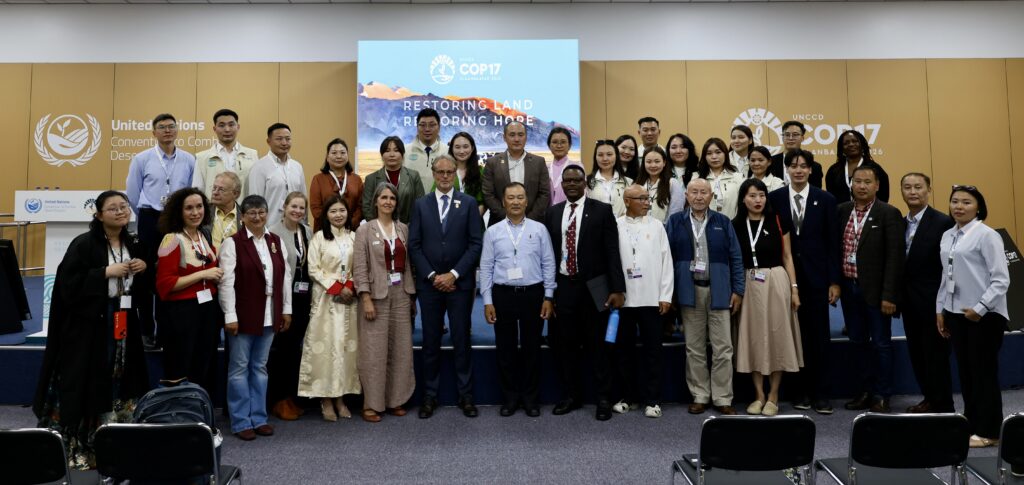
Like Khashat, where we visited one of the sites where Wetlands International is partnering with the Wildlife Science and Conservation Center of Mongolia (WSCC) and local herding communities to restore degraded peatlands. It was an incredible opportunity to see our work in the field before joining thousands of other participants at the UN Convention to Combat Desertification (UNCCD) COP17 — and it could not have been more appropriate.
Because the conversations taking place inside the corridors and rooms of COP17 in Ulaanbaatar are ultimately about what happens on the ground far from the conference centre.
Mongolia’s landscapes are under enormous pressure. UNCCD reporting has classified around 36 million hectares — almost a quarter of the country’s land area — as degraded. Climate change and changing patterns of land use and livestock production are putting additional pressure on grasslands and wetlands, accelerating degradation and threatening the resilience of pastoral communities.
But statistics only tell part of the story.
In the field, you can see what peatland degradation actually looks like. You see places where peat has disappeared, where soils are thinning, where gullies cut through the surface and where pastures are struggling to recover.
But you can also see something else: hope.
In Khashat, we shared bread and cheese in a beautiful ger with a family supporting the restoration work. They know that something needs to change, and they are open to exploring solutions together with us and our local partners. And the early signs of restoration are encouraging.
A plot fenced just a year ago is already showing signs of peat formation. Vegetation and water are returning to an area that was previously dry. The restored peatland is beginning to act as a natural sponge, holding rainfall and slowly releasing water into a pond where animals can drink. And while only three cranes were seen last year, we now saw around 30.
These are small changes in an enormous landscape. But they matter. They show what restoration can look like when it is rooted in local realities and solutions, supported by communities and informed by science.
From a restored wetland to a UN conference room
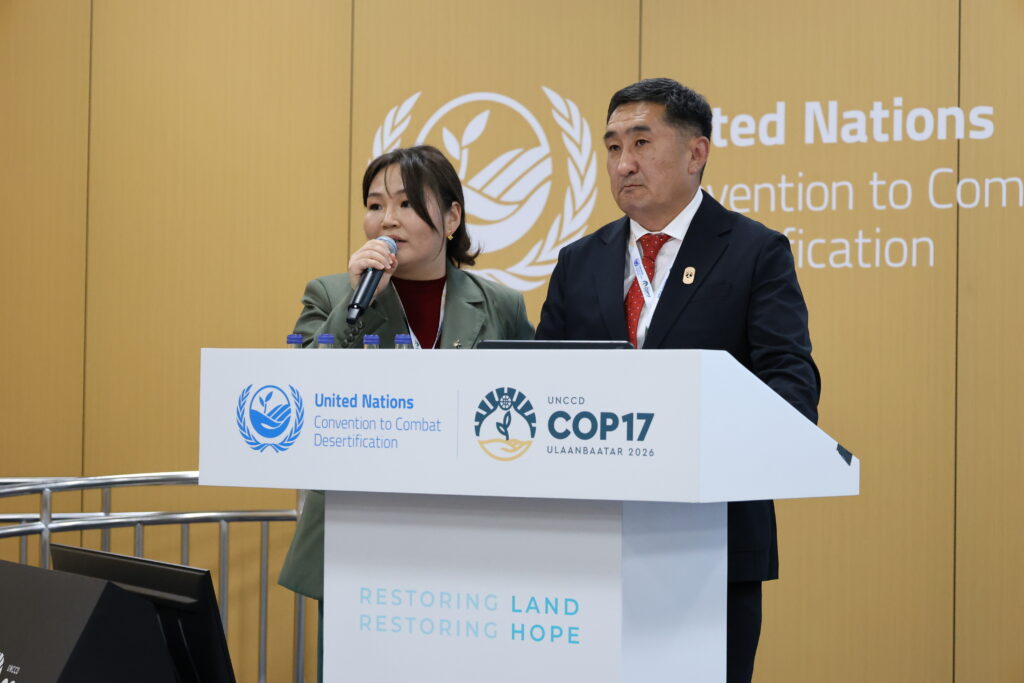
A short time later, I found myself in a very different setting: an official side event at COP17. The subject was the same — peatlands — but the conversation had expanded dramatically.
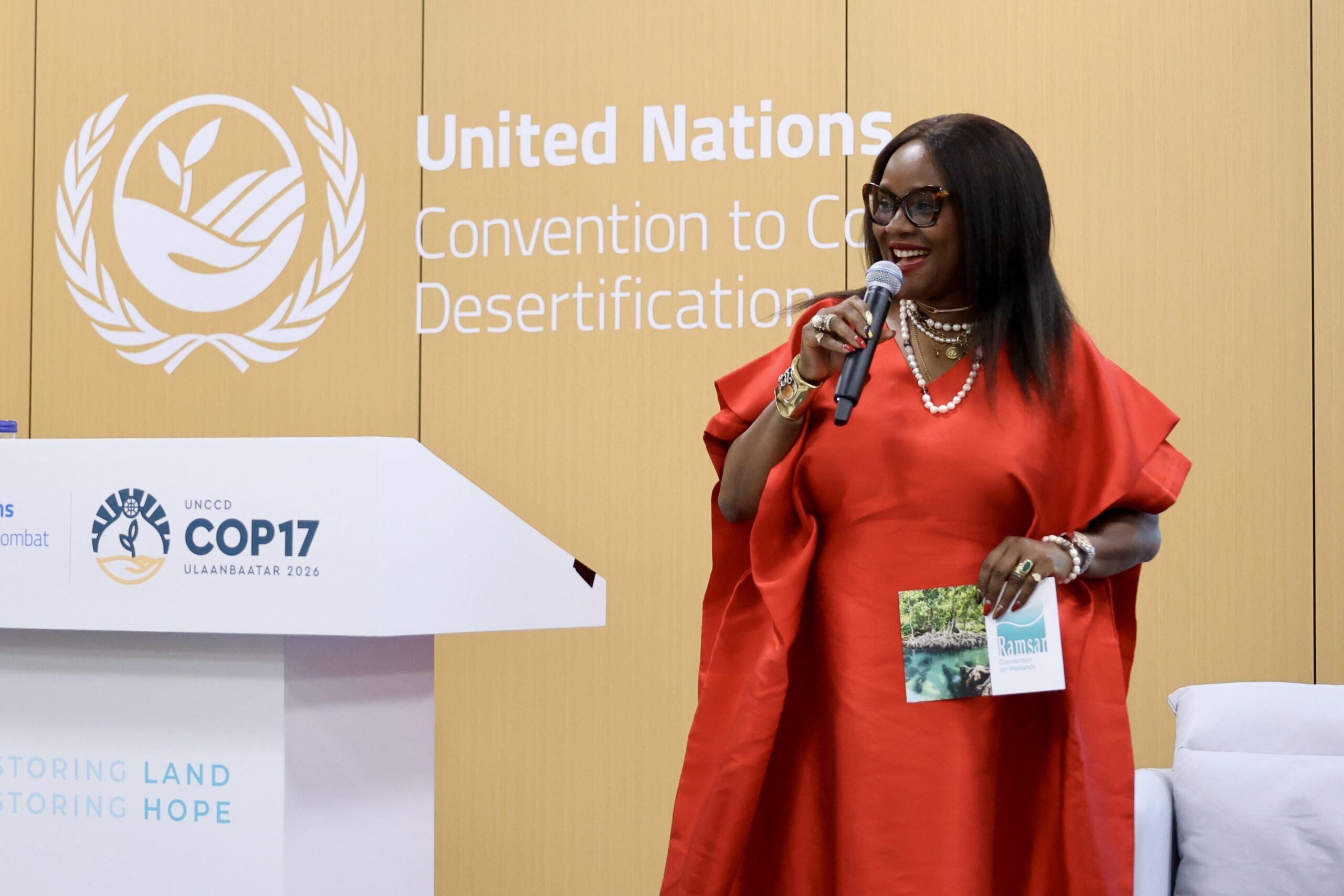
Co-hosted by WSCC, FAO, the Greifswald Mire Center, Michael Succow Foundation and Wetlands International, the session brought together the Secretary General of the Convention on Wetlands, Dr Musonda Mumba (photo below), as well as representatives from the Mongolian government, UN agencies, research institutions, NGOs and civil society.
The conversation made something very clear: peatlands are not a niche environmental issue. They sit at the heart of some of the biggest challenges the world is trying to tackle — land degradation, drought, climate change, biodiversity loss, and water security. They store enormous amounts of carbon, regulate water flows, and provide refuge for diverse species. They function as “sponges”, helping to absorb and store water, and slowly release in dry times – helping to buffer the impacts of drought and combat land degradation, particularly in dryland landscapes.
This is why countries need to commit to protecting and restoring them.
Connecting the dots
One of the things I value most about working at Wetlands International is that we can work across these different levels.
We can be in a ger with a herding family, discussing specific wetland solutions that benefit people and nature. We can work alongside Mongolian scientists and conservation organisations to understand peatland hydrology, degradation and restoration. We can support governments as they integrate peatlands (and other wetlands) into their national plans and commitments.
And we can bring those experiences and lessons into global spaces where critical decisions about people, nature and climate are being taken.
The UNCCD side event was a good example of this local to global connection.
Mongolia is already taking steps to bring peatlands into national policy. The country’s government is implementing a peatland restoration project, supported by UNDP, with an initial target of around 8,000 hectares across several provinces. Peatlands have also been incorporated into Mongolia’s National Adaptation Plan and Nationally Determined Contribution.
But policy cannot succeed without action on the ground. And restoration cannot reach the scale required without enabling policies, finance, science and collaboration. That is why partnerships matter so much.
At the COP17 session, we heard repeatedly that no single organisation can solve the peatland challenge. Governments, communities, researchers, NGOs, UN agencies and other partners each have a role to play. Local knowledge is essential. Science and mapping are essential. Policy frameworks and finance are essential. And, ultimately, all of these pieces need to connect.
From ambition to action
This is also the thinking behind the Peatland Breakthrough, which Wetlands International is driving alongside UNEP, FAO and the Greifswald Mire Center.
The ambition is substantial: halt peatland loss and drainage by 2030, put at least 30 million hectares of degraded peatlands under restoration by 2030, and create the conditions for the wise use of all peatlands by 2050. Achieving this will require not only action on the ground, but also better data, stronger policies and significant new finance.
Standing in the field at Khashat, these global targets can feel very far away. But they are not disconnected.
A restored patch of peatland in Mongolia is part of the same story as a national adaptation plan, a global peatland target or a discussion at the UN. And the reverse is also true: global commitments only have meaning if they translate into real improvements in landscapes and livelihoods.
That is the bridge we need to keep building.
A partnership for the long term
There was a particularly meaningful moment after the COP17 side event.
Wetlands International and WSCC signed a multi-annual collaboration agreement, building on several years of partnership and committing to longer-term work to conserve and restore Mongolia’s wetlands, including peatlands, for people, nature and climate.
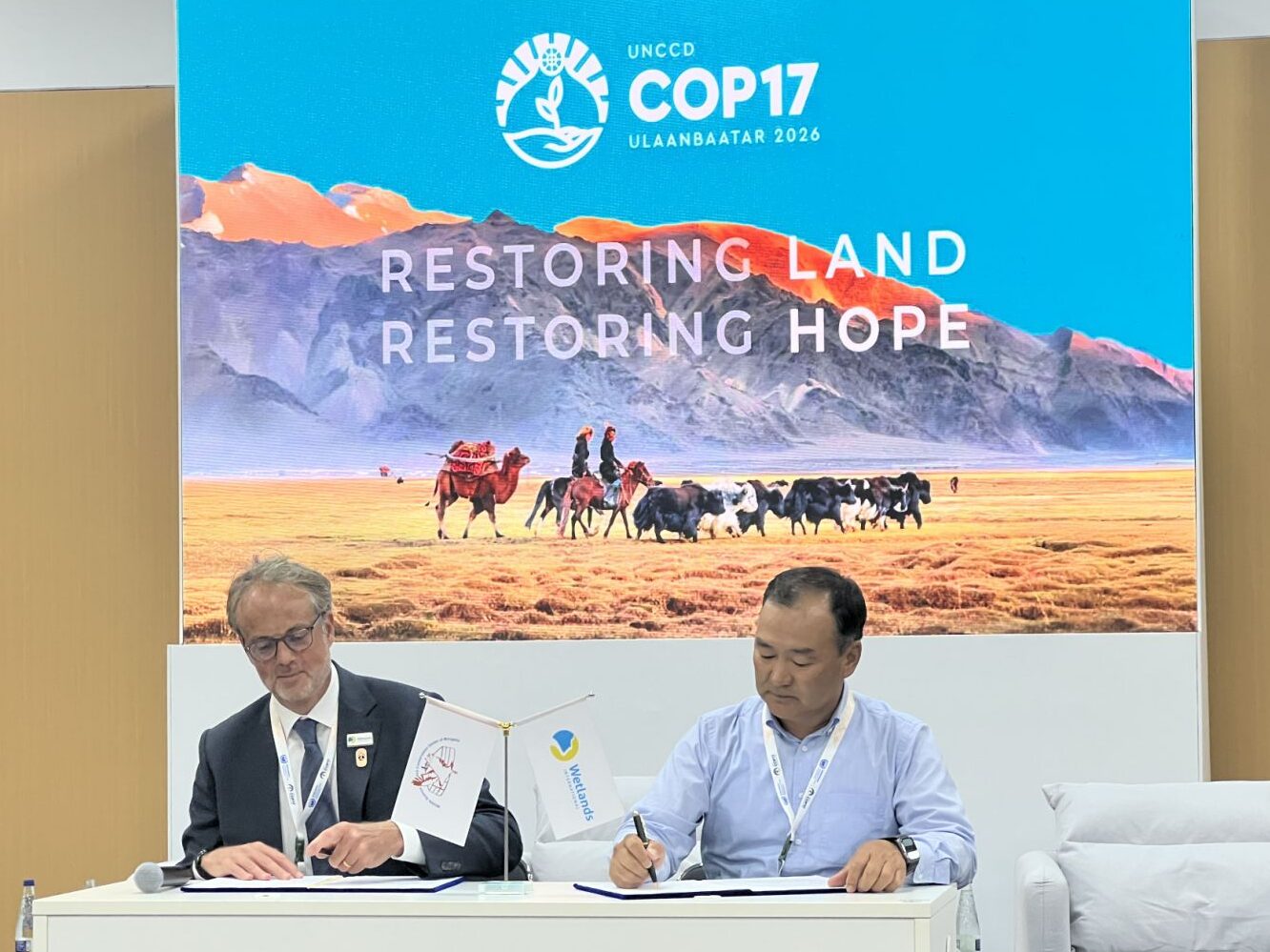
For me, this captured what our work is all about. Not the distance between a restoration site and a UN conference room, but the connection between them.
The family we met out on the steppe. The herding communities living with a changing landscape. The scientists mapping peatlands. The cranes. The Mongolian government developing national plans. Our partners working on restoration. The Ramsar Convention connecting wetlands to the wider multilateral environmental agenda. And the international community working to turn global ambition into action.
The challenges facing Mongolia’s landscapes are complex. There will be no single solution.
But standing in Khashat, seeing water and vegetation return, and then sitting in a room with partners from across the world discussing how to scale that kind of action, I was reminded of something important:
Change is possible. It is urgent, and it is feasible.
Our role at Wetlands International is to help connect the dots — from local knowledge to global policy, from science to practice, and from restoration on the ground to the ambition and finance needed to protect wetlands at scale.
That is how we turn global commitments into change that people can actually feel.