
World Water Week 2026: Wetlands for people and progress
By Jeroen Jurriens, Programme Manager Community Resilience at Wetlands International
I will be at World Water Week this year, not for the first time, reiterating that healthy wetlands are at the heart of mitigating the water crisis.
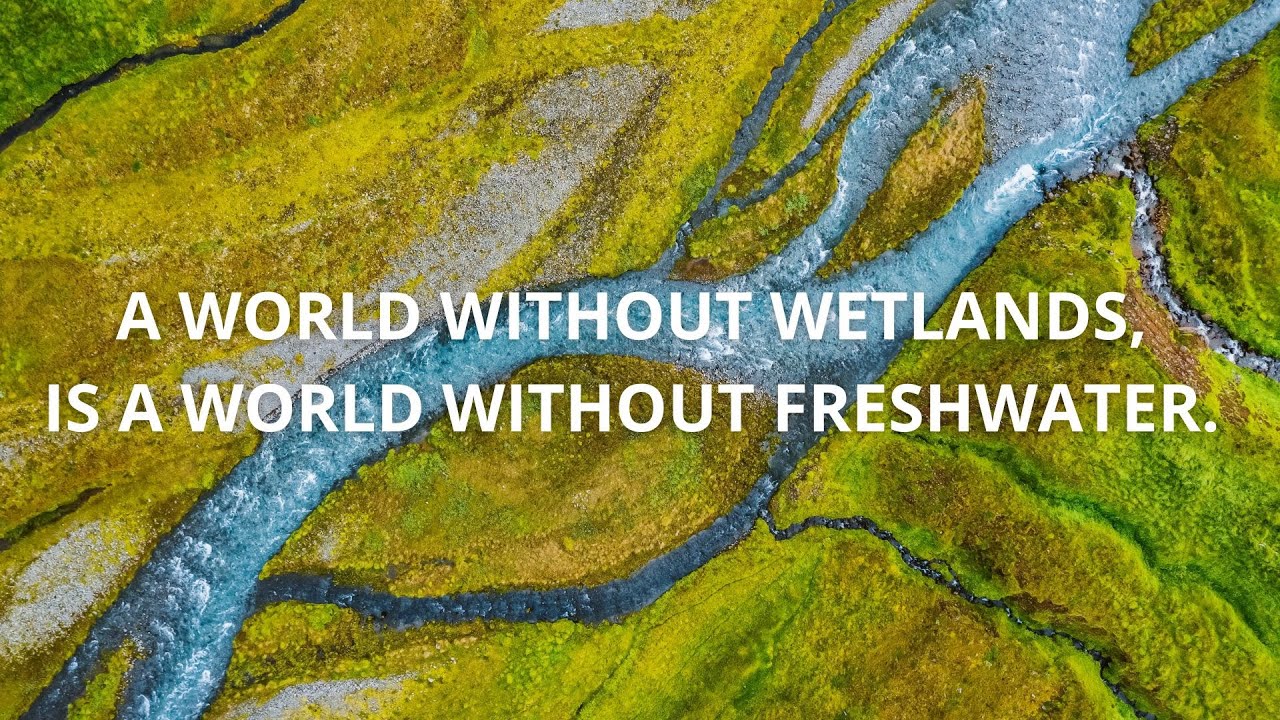
Nearly all the world’s freshwater is supplied by wetlands like rivers, lakes, and peatlands. They play a crucial role in water purification, storage, flood control, and groundwater recharge. Wetlands are so central to the water cycle that a world without wetlands would be a world without freshwater.
The latest Global Wetland Outlook shows that we have lost 22% of the world’s wetlands since 1970. Continued wetland decline could unleash up to US $39 trillion in economic losses by 2050.
Wetlands around the world are threatened by a myriad of problems – from unsustainable development to agriculture and climate change. Most long rivers are dammed and cut off from their natural floodplains. Only a third still flow freely.
And we are already seeing its consequences. Rivers across Europe like the Rhine and the Danube are drying up, pushing the Netherlands deeper into drought, affecting Germany’s shipping industry, and Hungary, Romania, and France’s nuclear power plants. Freshwater ecosystems have seen a devastating 85% collapse in wildlife populations. Incidents of water-related violence have more than doubled in the past 10 years. And water scarcity is predicted to remain a primary cause of displacement in the future.
But rivers (and other wetlands) do not adhere to political boundaries. In fact, 60% of the world’s freshwater is transboundary – making international cooperation crucial in managing water resources and protecting wetlands.
At World Water Week, I look forward to sharing Wetlands International’s work. We need healthy wetlands for people and progress. Our work encompasses multiple facets including the need for a broader landscape approach, the ties to peace and security, cross-boundary collaboration, government-led action, and data-informed decision-making.
Wetlands 4 Resilience
Many serious issues facing the world can be traced back to degrading landscapes. If climate change, biodiversity loss, and food security are to be tackled at source, then landscape restoration and conservation must be at the center of the solution. Conserving and restoring wetlands must go hand in hand with managing the broader landscape, encompassing the broader catchment and the communities that depend on the landscape. That’s why we’ve embraced the Wetlands 4 Resilience Model, a Holistic Landscape Approach to wetlands, which uses the 4 Returns Framework as a basis. It’s a practical model that helps us design and implement restoration efforts through multi-stakeholder collaborations that benefit nature, people, and economies.
Wetlands 4 Resilience (W4R) is supported by the Swedish International Development Cooperation Agency (Sida) and builds on other initiatives of Wetlands International implemented in the past, including the one below.

Water, Peace, and Security
The Water, Peace, and Security partnership (WPS), of which Wetlands International is a member, is a consortium of organizations working towards the peaceful management of natural resources. WPS helps stakeholders identify and understand water-related security risks and undertake timely, informed, and inclusive action for conflict prevention and mitigation. The partnership uses big data, artificial intelligence, remote sensing, and human responses modelling to inform policymaking in water-stressed places like Mali, Ethiopia, Iraq, and Kenya.
The Freshwater Challenge
The Freshwater Challenge – to which Wetlands International is a Core Partner – is the largest river and wetland restoration initiative. Launched by Colombia, the Democratic Republic of Congo, Ecuador, Gabon, Mexico, and Zambia at the UN 2023 Water Conference as part of the Water Action Agenda, it aims to restore 300,000 km of degraded rivers and 350 million hectares of degraded wetlands by 2030 (about 30 percent of degraded wetlands), as well as conserve intact freshwater ecosystems.

The Wetland Atlas
Currently, wetland data is fragmented, siloed, inconsistent, and incomplete. The Wetland Atlas aims to bridge this gap by bringing together available information into a single, accessible tool. By combining biophysical, socio-economic and policy-relevant information, the platform enables governments, donors and investors to prioritise actions for greatest impact.

If you will be at World Water Week, please connect with me or my other colleagues – Francesca Antonelli, Michael Nelemans, and Simeneh Shiferaw.
Written by
Jeroen Jurriens