

Six highlights from Ramsar Standing Committee 67
The global wetland community came together in May on the shores of Lake Geneva for the first time since the high profile Convention on Wetlands COP15 in Victoria Falls, Zimbabwe last July.
During this event (the 67th meeting of the Convention on Wetlands Standing Committee, or SC67 for short), government delegates reviewed progress towards the new global wetlands goals and targets that were adopted last year, shared experience and expertise, and agreed further actions towards implementation. They were joined by experts and observers, including Wetlands International.
And the delegates got a lot done. Here are six of the highlights from a successful week in Switzerland:
Partners for Wetlands priorities
At the start of the main plenary, Wetlands International set the scene by delivering the opening statement on behalf of all six International Organisation Partners of the Convention on Wetlands.
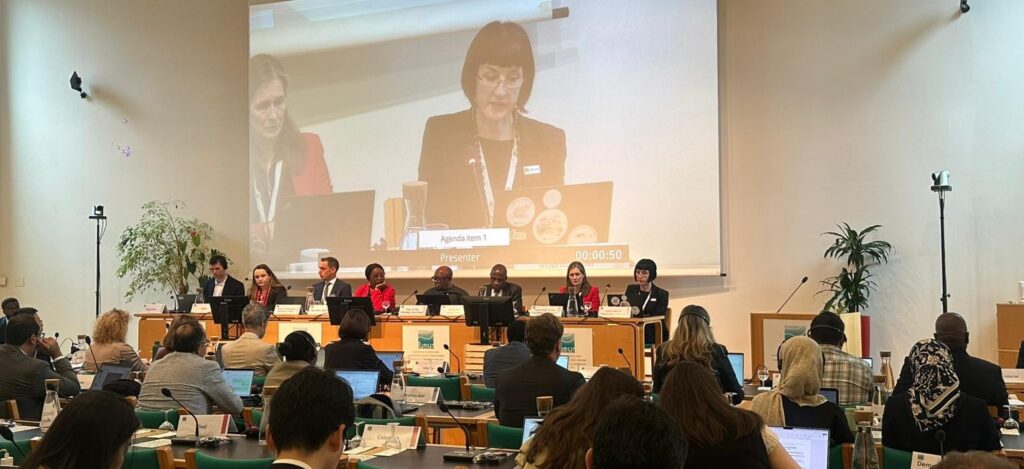
We highlighted three key priorities for action: addressing the root causes of wetland loss and degradation, especially in finance and economic decision-making; reconfiguring human-wetland relationships, including through Rights of Wetlands; and investing in wetlands as critical to the delivery of other MEAs, by prioritising them in implementation at national and regional level, and globally as critical watery connectors flowing through all three of 2025’s Rio COPs & the UN Water Conference.
Our official IOP information session later in the week was an opportunity to delve into the details of our work. As part of this, we highlighted progress across key implementation initiatives: the Freshwater Challenge, Mangrove Breakthrough, and Peatland Breakthrough. And we welcomed Contracting Parties’ views on how we can be even more effective in achieving shared wetland goals.
Wetland indicators
One of the most important decisions of SC67 was the adoption of the indicator framework to measure progress towards the targets of the Convention on Wetlands Strategic Plan 2025-2034. The indicator framework is strongly and explicitly aligned with the Global Biodiversity Framework and other global goals. Amendments were made to allow for flexibility in differentiating between lost and degraded wetlands, and to further improve alignment with targets to mobilise finance and reduce harmful incentives under the GBF.
This meant that SC67 could also adopt the template for National Reports, which are due by 7 December 2027 to inform a global implementation report at COP16. A draft guidance document was also presented, which will be refined and improved.
Waterbird Population Estimates
Following the establishment of the Global Waterbird Estimates Partnership (GWEP) at COP15 last July, another key decision of SC67 was to approve an update on progress and the creation of a permanent GWEP International Coordination Committee.
Whilst attention was rightly paid to the funding gap that urgently needs filling, this progress puts the GWEP on a more secure footing for its task of providing long-term coordination, scientific and technical guidance, and mobilization of resources to produce Waterbird Population Estimates in 2027 and beyond. This is crucial data for waterbird and wetland conservation and wise use, at national level and along global flyways, used for the designation and management of Wetlands of International Importance under Ramsar, and for wider waterbird conservation actions.
Science in the spotlight
Contracting Parties enthusiastically welcomed a report on the vital work of the scientific and technical body of the Convention on Wetlands (STRP) and plans to strengthen involvement of early career researchers, promote outputs, and expand collaboration.
Parties also considered a list of prioritised STRP tasks, including four that we highlighted in the International Organisation Partner opening statement: GEOwetlands (using earth observation for wetlands inventories, assessment, monitoring, management, and reporting); the next Global Wetland Outlook on cities; analysis of transformative change pathways for wetlands including OECMs; and a report on wetlands and the water cycle to be launched at the UN Water Conference later this year.
Cities and wetlands
SC67 received an update on the Wetland Cities accreditation scheme and welcomed the news that future roundtables of Wetland City Mayors would take place in Valdivia, Chile in 2027, and Mechelen in Belgium in 2028. Preparation is already underway for this year’s wetland city mayors roundtable in Niigata, Japan, with a focus on rice paddies and the importance of urban wetlands for waterbirds as well as people.
With ever more people living in cities, conversations centred around the increasingly important role of the Wetland City Accreditation scheme in building public awareness and education on wetland conservation and wise use, and the contribution of urban wetlands to global biodiversity targets especially those relating to urban green and blue spaces, climate adaptation, and ecosystem services.
The Convention on Wetlands accreditation scheme for Wetland Cities grants global recognition to towns and cities that maintain a strong and positive relationship with wetlands, with 74 cities from 27 countries so far officially recognised. With the deadline for new applications in December this year, the next Global Wetland Outlook focusing on cities, and the theme of World Wetland Day 2028 chosen as ‘“Wetlands for sustainable cities” to align with the next wetland COP in Panama City, interest and action on urban wetlands is only expected to grow further.
Rights of wetlands
With Rights of Nature movement gaining momentum at local and national level across the world, and Panama recently raising the rights of nature at the UN, conversations during SC67 picked up on the exciting potential for Rights of Wetlands approaches as an impactful route for wetland conservation and restoration aligned with the need for transformative change. Building on recent IUCN resolutions on the rights of rivers and rights of nature, alongside the ongoing work of the Rights of Wetlands Initiative, we’re strongly supportive of the idea of a new Draft Resolution on the rights of wetlands that could be brought by Contracting Parties to the next wetlands COP.
***
Far beyond these six highlights, formal deliberations and informal conversations covered a huge range of topics such as the risks to wetlands, water security and nature of the potential dilution of the Water Framework Directive and the threats to the High Andean wetlands from increased lithium mining; the increasingly important role of Ramsar Regional Initiatives (RRIs) in driving implementation across boundaries, with welcome confirmation of new funding for the new Southern African RRI and Danube WILD Island RRI; and the vast amount of work needed on wetland finance, including a resource mobilisation plan that was adopted by Parties, where IOPs also have a lot to offer.
With just over two years until the next wetlands COP in Panama City, the focus remains firmly on action and implementation at local, landscape, national and regional level. As International Organisation Partners to the Convention on Wetlands, we look forward to continued collaboration with governments, the secretariat and an increasing range of wetland partners from across society to scale up wetland protection and restoration for the benefit of people, nature and climate.
———
All SC67 documents can be found here. See also article on Convention on Wetlands website here. You can also read more about Wetlands International’s aspirations for the meeting here.